Alcohol in the Viennese Parliament
Keywords:
Hapbsburg monarchy, Cisleithania, national assembly, MPs, obstruction, alcohol, everyday lifeAbstract
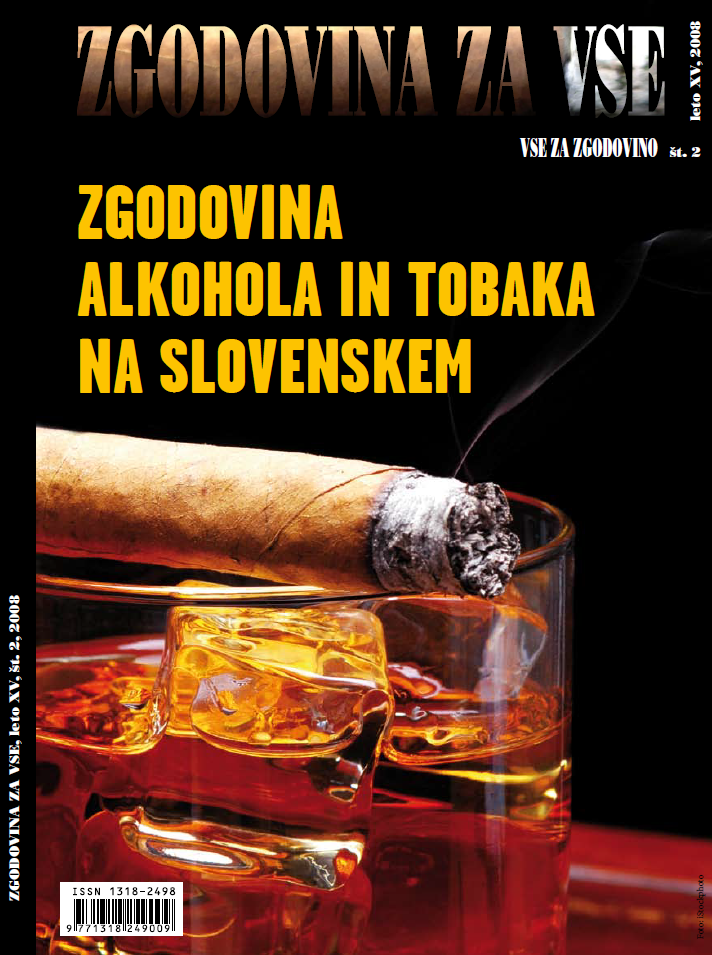
During every year's budget debate in the National Assembly, alcohol was one of the main topics to stir passions. The discussions regarding the high level of taxes on beer, wine and spirits was usually heated, since it was always difficult to bring into line the interests of the state, the producers and the numerous consumers. But alcohol was present in the national assembly in a number of other ways as well. The Austrian Parliament – among many other things – housed an excellent restaurant that offered the MPs above-average service at moderate prices. A number of excellent coffee shops and public houses were also located in the immediate vicinity of the parliament. If we are to believe the MP from Maribor, Gustav Kokoschinegg, the parliamentary restaurant was always busy, while the big plenary room usually remained empty. The honoured representatives of the nation’s favourite past time was playing cards and drinking. By the time of the evening sessions, the MPs were already a bit tipsy and were thus not afraid to tackle topics about which they did not have a clue. Drunkards, however, came not only from the ranks of German MPs; it was also the rosy red cheeks of the most successful Cisleithanian Prime Minister, Count Taaffe, that testified convincingly that the man was a true lover of good wine. It was not for no reason that German MPs were designated the “intoxicated pre-Teutons” by their political opponents. Quite a few lovers of alcoholic stupefaction also came from the ranks of Slovene MPs, who apparently spent more time in local public houses than in the parliament. MPs appearance in the debates often showed signs of some of that political self-confidence that – as Jaroslav Hasek puts it – gets aroused by alcohol. The MPs' speeches too often resembled what Ivan Robida referred to as “drunk talk”. Alcohol, of course, was also an inevitable part of the obstruction excesses that were common in the national assembly from the end of the 19th century. It is thus no wonder that during the climax of the obstruction against the Badeni language ordinances in November of 1897 the parliament reminded the correspondent of Slovenski narod of the most godforsaken tavern.
Downloads
Published
Issue
Section
License
Copyright (c) 2025 Janez Cvirn

This work is licensed under a Creative Commons Attribution-ShareAlike 4.0 International License.
Authors who publish with this journal agree to the following terms:
- Authors retain copyright and grant the journal right of first publication with the work simultaneously licensed under a Creative Commons Attribution License that allows others to share the work with an acknowledgement of the work's authorship and initial publication in this journal.
- Authors are able to enter into separate, additional contractual arrangements for the non-exclusive distribution of the journal's published version of the work (e.g., post it to an institutional repository or publish it in a book), with an acknowledgement of its initial publication in this journal.
- Authors are permitted and encouraged to post their work online (e.g., in institutional repositories or on their website) prior to and during the submission process, as it can lead to productive exchanges, as well as earlier and greater citation of published work (See The Effect of Open Access).