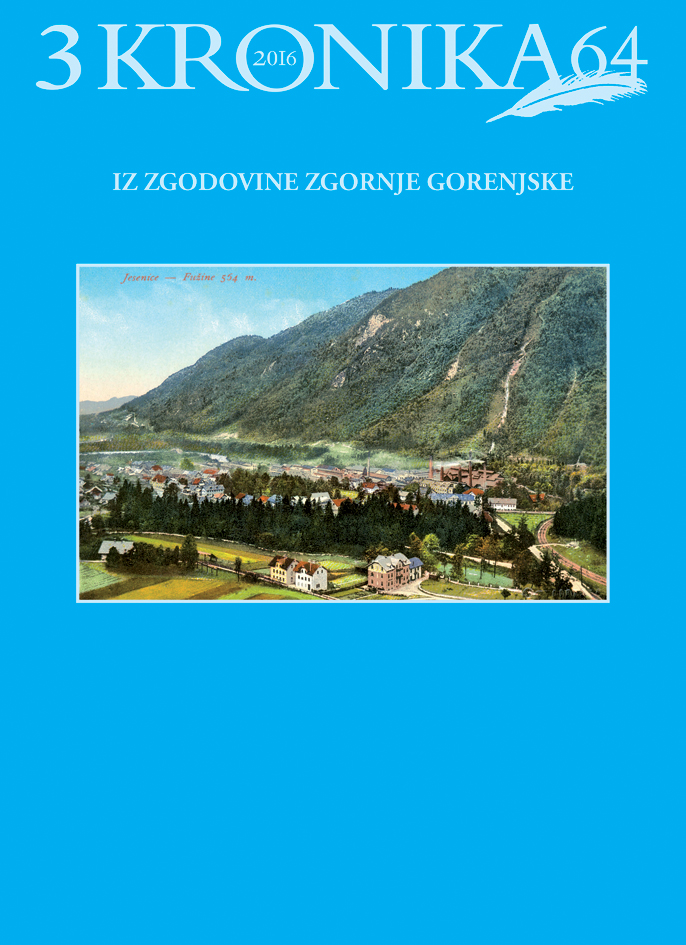
The role of Bucelleni and Ruard families in the Upper Sava Valley iron production
Keywords:
ironmaking industry, mining, economy, Sava, Jesenice, Bucelleni family, Ruard familyAbstract
The Bucelleni and Ruard families left an important mark on the development of the Upper Sava Valley. The former introduced advanced methods of steel production: the increased production volume required greater water power as well as higher consumption of coal. The search for energy sources met with resistance among other users of forests, waters and paths. A relatively large volume of preserved correspondence between the ironworks owners, the higher mining court judge and the administrators of the Bled seigniory offers an insight into the development of ironmaking industry from the 16th to the 19th century. The greatest friction arose with the owners of the Bled seigniory, the Diocese of Brixen, which was finally settled after the seigniory was purchased by ironmaster Viktor Ruard. He modernised the more than three centuries old steel production method by setting up a puddling furnace on the Sava River. The end of ironmaking industry, however, was brought about by the Carniolan Industrial Company with the construction of the Siemens-Martin’s steelworks.