Boj za prehode proti Jadranu – Kras od 12. do 15. stoletja
Politično- in vojnozgodovinska skica
DOI:
https://doi.org/10.56420/Kronika.63.3.02Ključne besede:
Kras, pozni srednji vek, prelazi, gradovi, trgovske poti, najemniško vojskovanje, oglejski patriarh, Goriški, Celjski, Habsburžani, beneška republikaPovzetek
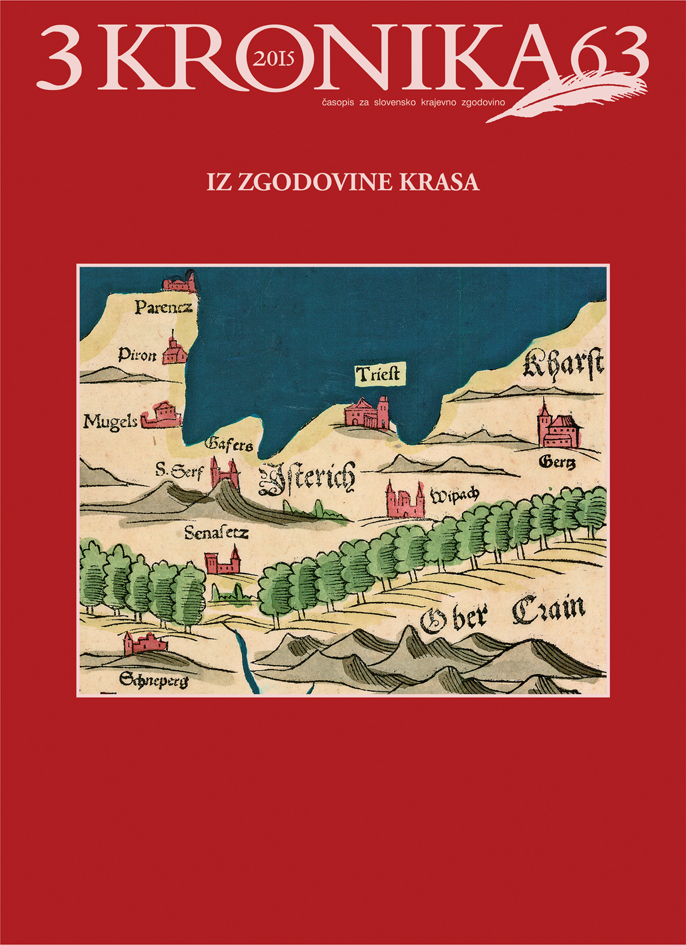
Kras v poznem srednjem veku je pomenil obsežno območje od notranjskih kraških polj do neposrednega zaledja
obalnih mest. Šlo je za izrazito prehodno območje s prelazi in pomembnimi trgovskimi cestami, z velikim strateškim
in ekonomskim značajem. Za prevlado v tej regiji in glavna gospostva Lož, Postojno in Vipavo, so se skozi stoletja
borile vse regionalne sile iz Kranjske, Koroške, Furlanije. Koroški Spanheimi, bavarski Andeški in Bogenski v 12.
in 13. stoletju; grofje Goriški in oglejski patriarh v 13. in 14. stoletju; Habsburžani, grofje Celjski in Ortenburški
v 14.–15. stoletju, in končno Habsburžani ter beneška republika. Avstrijska vladarska hiša je s pridobitvijo Trsta
leta 1382 dobila izhod na morje in latentno konfrontacijo z Benetkami. Šele cesar Maksimiljan je v vojni 1508–16
dokončno prevladal v zaledju jadranskih pristanišč in s tem utrdil vlogo habsburškega Trsta. Vojaško in politično
dogajanje v kraškem območju je bilo izredno dinamično in nima primerjave v širšem slovenskem območju.
Prenosi
Objavljeno
Številka
Rubrika
Licenca
Avtorske pravice (c) 2024 Miha Kosi

To delo je licencirano pod Creative Commons Priznanje avtorstva-Deljenje pod enakimi pogoji 4.0 mednarodno licenco.