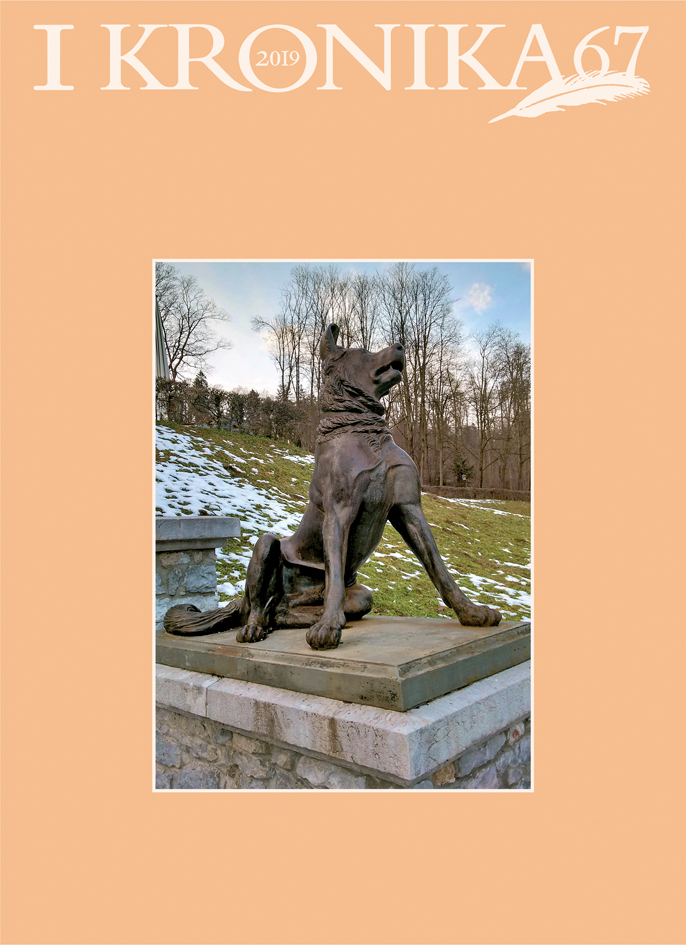
The cast-iron Molossian dogs in front of the Tivoli mansion in Ljubljana within the European context
Abstract
The article focuses on four cast-iron sculptures of Molossian hounds at the foot of the stairs leading to the Tivoli mansion in Ljubljana. These are casts of two mirror-image moulds from the second half of the nineteenth century, which only differ in the position of their heads and hind legs. Although attributed to the German-Austrian historicist sculptor Anton Dominik von Fernkorn, they are, in reality, replicas of marble Roman Molossian dogs, copies of the lost Hellenistic bronze original dating from the second or third century BC. Other examples of Roman copies can be found in the Uffizi Gallery, the British Museum and the Museo Pio-Clementino of the Vatican Museums, all nearly identical, except for their size. A model for cast-iron replicas (imitating the dogs in the Uffizi Gallery) was used by the Berlin foundry already at the end of the 1820s, and after the mid-nineteenth century by several European foundries, including that of Prince Salm in Blansko, Moravia. Given the historical circumstances, Ljubljana’s cast-iron dogs, too, can in all likelihood be classified as Salm’s products and their installation set in the period 1852–1856, when the mansion was owned by Field Marshall Joseph Radetzky.