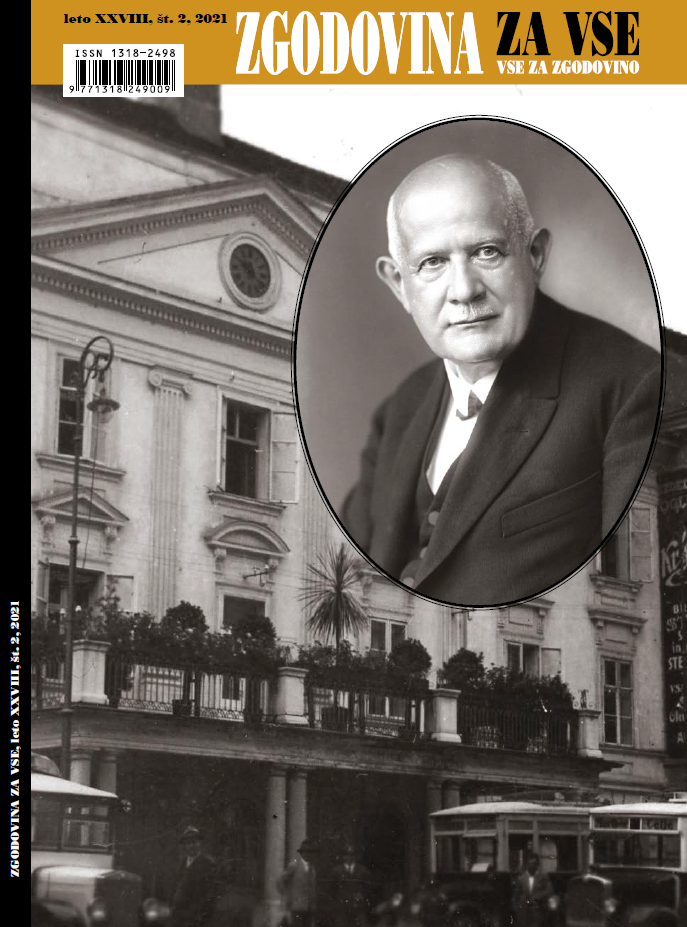
Dr. Juro Hrašovec – prvi slovenski župan Celja
Ključne besede:
Juro Hrašovec, župan, Celje, boj za enakopravnost slovenskega jezika, denarni zavodi, slogaštvoPovzetek
Na prvih povojnih volitvah, 26. aprila 1921, je v Celju slavila Jugoslovanska demokratska stranka, njen član dr. Juro Hrašovec pa je bil 18. maja 1921 izvoljen za prvega slovenskega župana Celja. V Pokrajinskem muzeju Celje smo natanko sto let pozneje odprli razstavo z naslovom Dr. Juro Hrašovec – prvi slovenski župan Celja, avtorja mag. Damirja Žeriča. V muzeju hranimo dobršen del materialne zapuščine rodbine Hrašovec, vsebinsko jedro razstave pa predstavljata dva kratka življenjepisa, ki ju je Hrašovec napisal v letih 1936 in 1950. Razstava odstira glavne poudarke Hrašovčevega delovanja – boj za enakopravnost slovenskega jezika, boj za ustanavljanje slovenskih šol, vpetost v ustanavljanje in delovanje slovenskih finančnih zavodov, povezovalno vlogo pri slogaštvu in obdobje njegovega županovanja.
Prenosi
Objavljeno
Številka
Rubrika
Licenca
Avtorske pravice (c) 2025 Damir Žerič

To delo je licencirano pod Creative Commons Priznanje avtorstva-Deljenje pod enakimi pogoji 4.0 mednarodno licenco.
Avtorji prispevkov, objavljenih v tej reviji, soglašajo z naslednjimi pogoji glede avtorskih pravic:
- Avtorji ohranijo avtorske pravice, reviji pa odobrijo pravico do prve objave. Delo se hkrati zaščiti z licenco za prosto uporabo avtorskih del (Creative Commons Attribution License), ki drugim osebam omogoča deljenje dela ob priznanju avtorstva in prve objave v tej reviji.
- Avtorji lahko sklenejo ločene dodatne pogodbene dogovore za neizključno distribucijo različice dela, objavljene v reviji, (npr. oddaja v institucionalni repozitorij ali objava v knjigi) z navedbo, da je bilo delo prvič objavljeno v tej reviji.
- Pred postopkom pošiljanja in med njim lahko avtorji delo objavijo v spletu (npr. v institucionalnih repozitorijih ali na svoji spletnih strani), k čemer jih tudi spodbujamo, saj lahko to prispeva k plodnim izmenjavam ter hitrejšemu in obsežnejšemu navajanju objavljenega dela (glej The Effect of Open Access).