“He lived and worked between the German and Slovenian cultures”
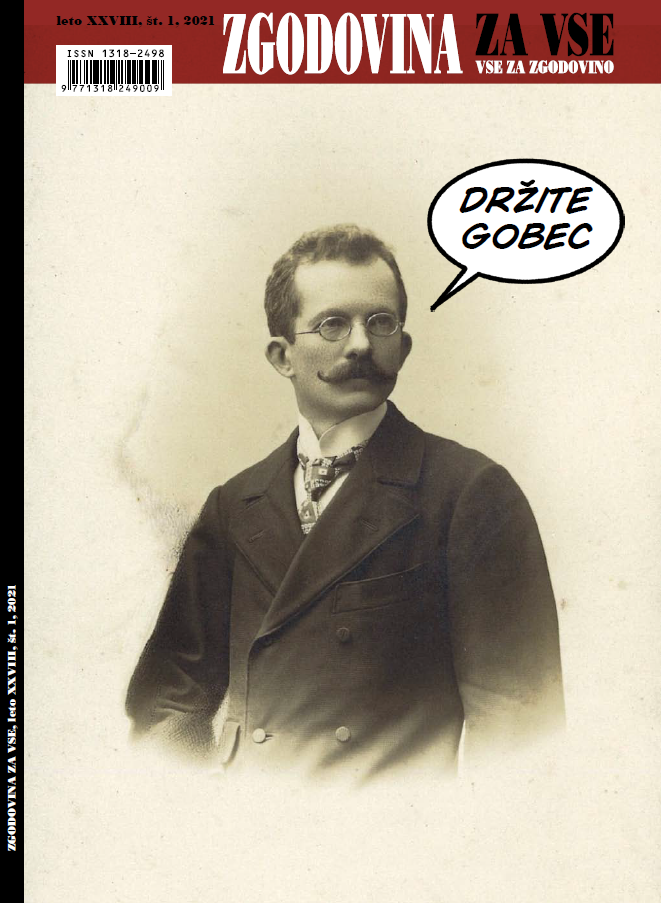
Josip Ipavec (1873-1921)
Keywords:
Josip Ipavec, Ipavec Year, Lieder, choirsAbstract
The author lists all relevant biographical and bibliographical facts that raised the last member of the dynasty of four medical doctors and Slovenian-Celje Ipavci composers (Alojz, Benjamin, Gustav in Josip) to the European level of music artistry. Josip Ipavec (1873-1921), the centenary of whose death is commemorated in 2021 with the National Year of Ipavec, underwent the most thorough formal music training, even though none of the four received any professional training in composition. Josip was also the only one whose vocal pieces (Lieder and choirs) was mostly composed for lyrics in German, including those by such prominent (European) poets as H. Heine, J. W. v. Goethe, E. Geibel, L. Uhland, N. Lenau, E. Schönaich-Carolath, and J. Rodenberg. Undoubtedly, the crown jewel of Ipavec’s music oeuvre remains the ballet-pantomime Možiček [Little man] (1900-1901), the first Slovenian ballet piece; less successful if not unsuccessful was his opera/operetta Princesa Vrtoglavka [The giddy princess] (1905-1910).
Downloads
Published
Issue
Section
License
Copyright (c) 2025 Franc Križnar

This work is licensed under a Creative Commons Attribution-ShareAlike 4.0 International License.
Authors who publish with this journal agree to the following terms:
- Authors retain copyright and grant the journal right of first publication with the work simultaneously licensed under a Creative Commons Attribution License that allows others to share the work with an acknowledgement of the work's authorship and initial publication in this journal.
- Authors are able to enter into separate, additional contractual arrangements for the non-exclusive distribution of the journal's published version of the work (e.g., post it to an institutional repository or publish it in a book), with an acknowledgement of its initial publication in this journal.
- Authors are permitted and encouraged to post their work online (e.g., in institutional repositories or on their website) prior to and during the submission process, as it can lead to productive exchanges, as well as earlier and greater citation of published work (See The Effect of Open Access).