“Not much new. War is hell .”
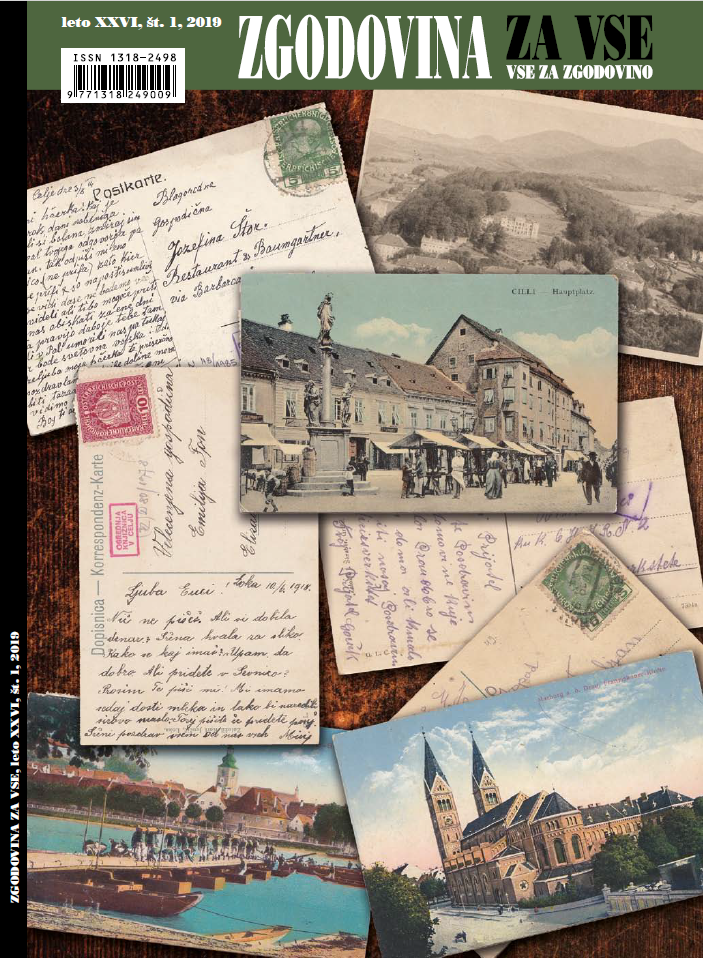
World War I in Postcards from Lower Styria
Keywords:
picture postcards, World War I, History of everyday life, Lower StyriaAbstract
The illustrated picture postcard from the beginning of the 20th century is an innovative source for history from below, offering insights into the lives of common people. The postcard was the first truly popular medium of mass communication and, before the rise of the telephone, the fastest means of everyday communication. Additionally, World War I made itself evident on postcards. Postcards can reveal signs of wartime, even though the war is rarely mentioned directly. By discussing examples from Lower Styria, we seek to illustrate what can be learned about the time of World War I by looking at postcards: We can learn about everyday troubles and worries, but also how “normal life” continued for civilians. We can gain insights into the daily lives of soldiers and into the tense atmosphere among civilians—insights that cannot be found in official documents.
Downloads
Published
Issue
Section
License
Copyright (c) 2025 Karin Almasy, Martin Sauerbrey

This work is licensed under a Creative Commons Attribution-ShareAlike 4.0 International License.
Authors who publish with this journal agree to the following terms:
- Authors retain copyright and grant the journal right of first publication with the work simultaneously licensed under a Creative Commons Attribution License that allows others to share the work with an acknowledgement of the work's authorship and initial publication in this journal.
- Authors are able to enter into separate, additional contractual arrangements for the non-exclusive distribution of the journal's published version of the work (e.g., post it to an institutional repository or publish it in a book), with an acknowledgement of its initial publication in this journal.
- Authors are permitted and encouraged to post their work online (e.g., in institutional repositories or on their website) prior to and during the submission process, as it can lead to productive exchanges, as well as earlier and greater citation of published work (See The Effect of Open Access).