The Art of Selling or How to Be a Good Salesman
The image of the salesman in the first half of the 20th century
Keywords:
trade, selling, tradesman, shop assistant, trading profession, first half of 20th centuryAbstract
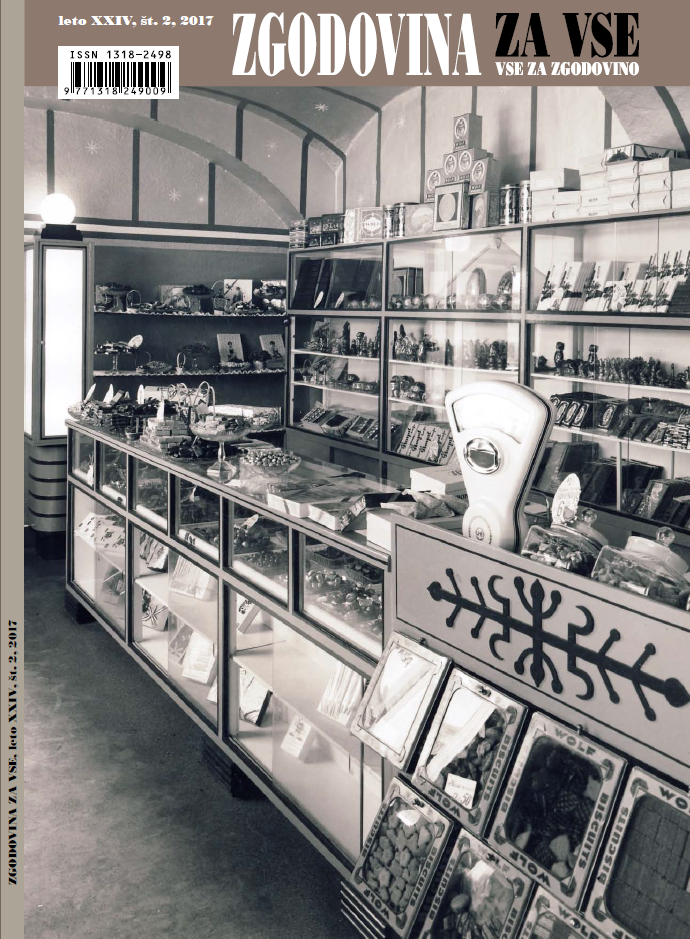
The profession of the tradesman is not regulated in Slovenia – the idea being to remove administrative barriers and increase mobility and flexibility in finding work and employment -and requires no training. Given that consumers are demanding and conscientious, the key decisionmaking protagonists believed that a competitive market would ensure continual growth in the quality of trading. However, this was not the case in the past. Older Slovenian tradesmen prospered and gained respect through self-education and diligence. In modern times, in the second half of the 19th century and the early 20th century, during the gradual development of the consumer society, working in a shop required theoretical and practical training that the candidates acquired through a diversified system of training institutions for tradesmen, while life-long training took place through specialized magazines. (In the pre-internet era) tradesmen had to know the goods they were selling, and they needed a good general education as well as certain intellectual abilities.
Downloads
Published
Issue
Section
License
Copyright (c) 2025 Marija Počivavšek

This work is licensed under a Creative Commons Attribution-ShareAlike 4.0 International License.
Authors who publish with this journal agree to the following terms:
- Authors retain copyright and grant the journal right of first publication with the work simultaneously licensed under a Creative Commons Attribution License that allows others to share the work with an acknowledgement of the work's authorship and initial publication in this journal.
- Authors are able to enter into separate, additional contractual arrangements for the non-exclusive distribution of the journal's published version of the work (e.g., post it to an institutional repository or publish it in a book), with an acknowledgement of its initial publication in this journal.
- Authors are permitted and encouraged to post their work online (e.g., in institutional repositories or on their website) prior to and during the submission process, as it can lead to productive exchanges, as well as earlier and greater citation of published work (See The Effect of Open Access).