“Groceries, Liqueurs, Raspberry Syrup, Spirits: en gros & en detail”
Alcohol and Tobacco Trade before the Second World War
Keywords:
trade, history of trade, 20th century, alcoholic drinks, excise duty, tobacco, monopolyAbstract
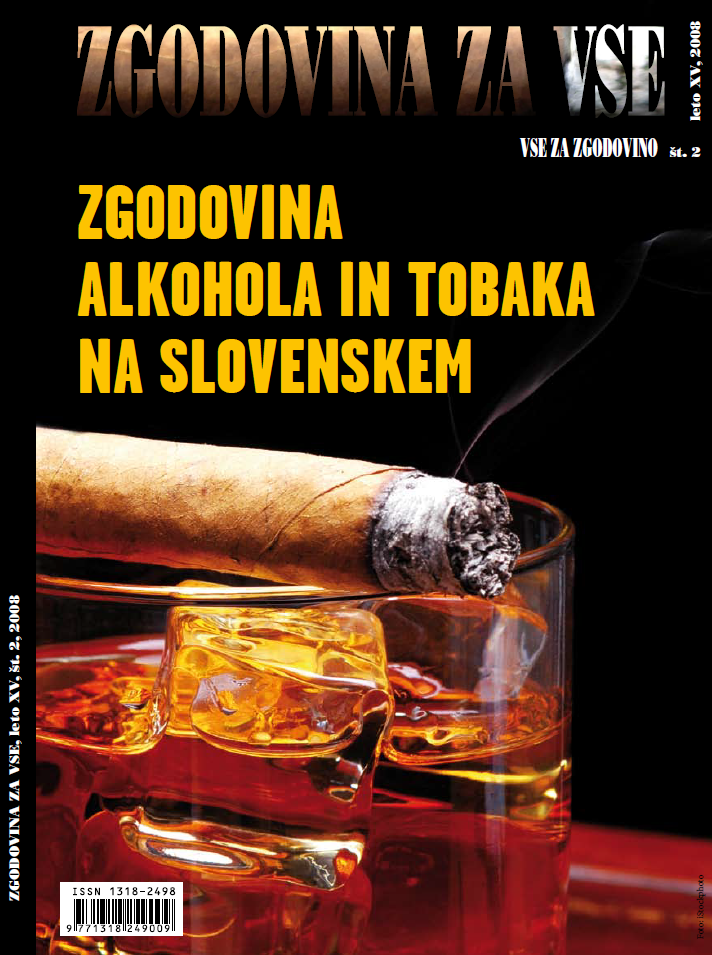
Handicraft regulations from as early as 1859 included trade and trade in alcohol among the tax-exempt crafts, while selling spirits was a licensed craft. With the amended handicraft regulations of 1883, trade in alcohol likewise became a licensed craft. The handicraft law of 1931 also required a mandatory training certificate for trade crafts. Regulations regarding requirements for the alcohol trade were often modified in that period - be it with regard to closed or open bottles, wholesale or retail trade. The most common type of trade between the world wars was trade in mixed goods, both in the countryside and in town. Among other articles, such stores also sold the kind of alcoholic beverages that would also please today's customers: wine, liqueur, brandy, cognac, rum, plum brandy, gin, grape skin brandy, wine lees spirit, maraschino, bilberry brandy, spirits and beer. Retail in alcoholic drinks also took place in kiosks, with costermongers and in commission sale shops. The extent of trade in wine, most of which was a combination of wholesale and retail or wholesale alone, amounted to about 6%. On top of the taxes, traders in alcoholic drinks had to pay an excise duty in the newly-founded Yugoslavia; the alcoholic drinks taxed under this state and provincial levy included spirits, wine, liqueur, rum and beer. The Austro-Hungarian state had a monopoly on the sale of tobacco and tobacco products; consequently, the lease of kiosks and tobacco quotas was carefully regulated. The state retained a monopoly over production and sale of tobacco in Yugoslavia; tobacco at this time represented an important export product. Interestingly, the economic crisis was also reflected in the consumption of tobacco products: the crisis led to a drastic fall in the consumption of luxurious and medium quality cigarettes, while the consumption of lower quality cigarettes increased considerably; the total consumption of cigarettes increased considerably with the economic crisis.
Downloads
Published
Issue
Section
License
Copyright (c) 2025 Marija Počivavšek

This work is licensed under a Creative Commons Attribution-ShareAlike 4.0 International License.
Authors who publish with this journal agree to the following terms:
- Authors retain copyright and grant the journal right of first publication with the work simultaneously licensed under a Creative Commons Attribution License that allows others to share the work with an acknowledgement of the work's authorship and initial publication in this journal.
- Authors are able to enter into separate, additional contractual arrangements for the non-exclusive distribution of the journal's published version of the work (e.g., post it to an institutional repository or publish it in a book), with an acknowledgement of its initial publication in this journal.
- Authors are permitted and encouraged to post their work online (e.g., in institutional repositories or on their website) prior to and during the submission process, as it can lead to productive exchanges, as well as earlier and greater citation of published work (See The Effect of Open Access).