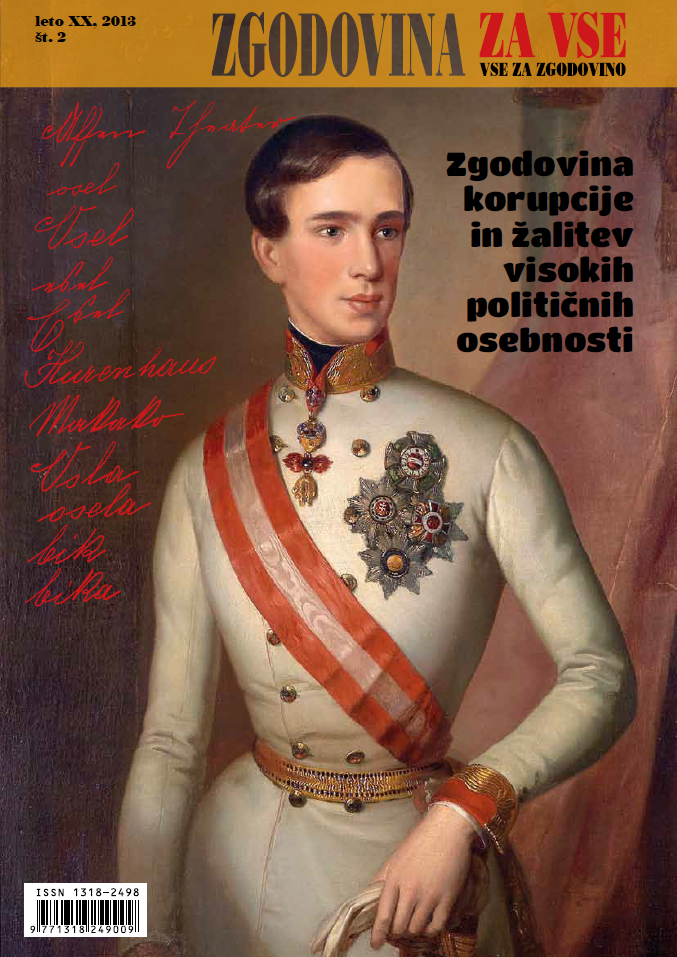
»Začarani krog družbene loterije, kamor se splača investirati«
Kako se je jugoslovanska družba med obema vojnama spopadala s politično korupcijo
Ključne besede:
korupcija, Kraljevina SHS, Jugoslavija, afera RašovićPovzetek
Opirajoč se na alegorije največjega pisateljskega »homo politicusa« in literarnega kronista obdobja prve Jugoslavije Miroslava Krleže avtor uvodoma ugotavlja, da je bila država do obisti korumpirana, a prave volje po spopadu s korupcijo ni bilo. V nadaljevanju se nato sprašuje, kako je bilo mogoče, da je bil ob vtisu vseprisotne korupcije spopad z njo tako jalov? Je pravzaprav vtis o silni razsežnosti korupcije v prvi Jugoslaviji napačen? Ali je bil morda prag dojemanja koruptivnih dejanj bistveno drugačnejši (nižji) od tedaj na zahodu veljavnih standardov? Je mogoče, da si družba kot celota ne bi želela spopada s korupcijo? Pisec nato išče odgovore s pomočjo sintetičnih zaključkov, teoretičnih razprav in obravnave vzorčnega primera.
Prenosi
Objavljeno
Številka
Rubrika
Licenca
Avtorske pravice (c) 2025 Jure Gašparič

To delo je licencirano pod Creative Commons Priznanje avtorstva-Deljenje pod enakimi pogoji 4.0 mednarodno licenco.
Avtorji prispevkov, objavljenih v tej reviji, soglašajo z naslednjimi pogoji glede avtorskih pravic:
- Avtorji ohranijo avtorske pravice, reviji pa odobrijo pravico do prve objave. Delo se hkrati zaščiti z licenco za prosto uporabo avtorskih del (Creative Commons Attribution License), ki drugim osebam omogoča deljenje dela ob priznanju avtorstva in prve objave v tej reviji.
- Avtorji lahko sklenejo ločene dodatne pogodbene dogovore za neizključno distribucijo različice dela, objavljene v reviji, (npr. oddaja v institucionalni repozitorij ali objava v knjigi) z navedbo, da je bilo delo prvič objavljeno v tej reviji.
- Pred postopkom pošiljanja in med njim lahko avtorji delo objavijo v spletu (npr. v institucionalnih repozitorijih ali na svoji spletnih strani), k čemer jih tudi spodbujamo, saj lahko to prispeva k plodnim izmenjavam ter hitrejšemu in obsežnejšemu navajanju objavljenega dela (glej The Effect of Open Access).