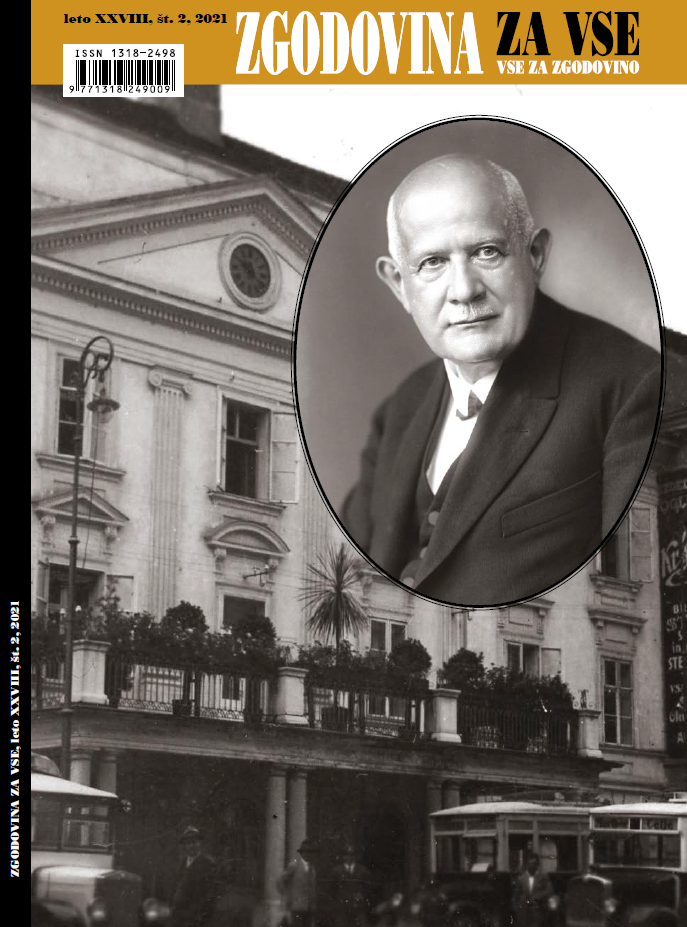
1918: Odvetniki med dvema državama
Amalgam habsburške monarhije in nove jugoslovanske države
Ključne besede:
Razpad habsburške monarhije, odvetniki, 1918, Juro Hrašovec, CeljePovzetek
Pričujoče besedilo je prispevek k razumevanju razpada rajnke Avstrije; pisec skuša pojasniti dileme in probleme procesov zaključevanja in oblikovanja nove jugoslovanske države skozi odvetniški stan, kamor je sodil tudi dr. Juro Hrašovec, prvi slovenski župan Celja. Metodološko se še najbolj spogleduje z zgodovino od spodaj in v glavnem temelji na arhivskem gradivu Odvetniške zbornice Slovenije. Odvetništvo jeseni leta 1918 in neposredno zatem je posebej zanimivo vsaj iz dveh razlogov. Najprej zato, ker tvori enega fundamentalnih delov moderne države – pravosodni sistem, po drugi strani pa tudi vsled tega, ker je bil delež odvetnikov med politiki, torej med odločevalci, najvišji izmed vseh poklicnih skupin (ne le v Avstriji, ampak skoraj v vseh zahodnih demokracijah).
Prenosi
Objavljeno
Številka
Rubrika
Licenca
Avtorske pravice (c) 2025 Jure Gašparič

To delo je licencirano pod Creative Commons Priznanje avtorstva-Deljenje pod enakimi pogoji 4.0 mednarodno licenco.
Avtorji prispevkov, objavljenih v tej reviji, soglašajo z naslednjimi pogoji glede avtorskih pravic:
- Avtorji ohranijo avtorske pravice, reviji pa odobrijo pravico do prve objave. Delo se hkrati zaščiti z licenco za prosto uporabo avtorskih del (Creative Commons Attribution License), ki drugim osebam omogoča deljenje dela ob priznanju avtorstva in prve objave v tej reviji.
- Avtorji lahko sklenejo ločene dodatne pogodbene dogovore za neizključno distribucijo različice dela, objavljene v reviji, (npr. oddaja v institucionalni repozitorij ali objava v knjigi) z navedbo, da je bilo delo prvič objavljeno v tej reviji.
- Pred postopkom pošiljanja in med njim lahko avtorji delo objavijo v spletu (npr. v institucionalnih repozitorijih ali na svoji spletnih strani), k čemer jih tudi spodbujamo, saj lahko to prispeva k plodnim izmenjavam ter hitrejšemu in obsežnejšemu navajanju objavljenega dela (glej The Effect of Open Access).