Hydropower and Entrepreneurship: Case Studies from Styria
IZVLEČEK
HIDROENERGIJA IN PODJETNIŠTVO: ŠTUDIJE PRIMEROV IZ ŠTAJERSKE
1V članku je obravnavana vloga hidroenergije kot izhodišča in strateškega vira za razvoj in dolgoživost tradicionalnih podjetij na Štajerskem. Na podlagi treh študij primerov – podjetij Herbert Lugitsch u. Söhne Ges. mbH in E-Lugitsch Elektro GmbH, Zellstoff Pöls AG ter Mosdorfer GmbH – avtorja analizirata, kako so ta podjetja skozi desetletja dosegla uspeh z izkoriščanjem hidroenergije (pionirstvo, strateška diverzifikacija, nišno pozicioniranje/diferenciacija, širjenje in sreča). Študija temelji na “graškem pristopu”, ki združuje poslovno upravljanje (Malik, Chandler, Porter) in zgodovinske pristope, da bi osvetlila dejavnike, ki vplivajo na dolgoživost podjetništva. Ugotovitve kažejo, da so bili poleg vodnih virov za dolgoročni uspeh bistvenega pomena tudi podjetniška daljnovidnost, prilagodljivost, sprejemanje konkretnih strateških odločitev in včasih tudi čista sreča.
2Ključne besede: hidroenergija, podjetništvo, Štajerska, poslovna zgodovina, graški pristop, dolgoživost podjetij
ABSTRACT
1This article examines hydropower as a starting point and strategic resource for the development and longevity of traditional enterprises in Styria. Drawing on three case studies – Herbert Lugitsch u. Söhne Ges. mbH and E-Lugitsch Elektro GmbH, Zellstoff Pöls AG, and Mosdorfer GmbH – the authors analyse how, over decades, these companies secured their success through hydropower (early-mover advantage, strategic diversification, niche positioning/differentiation, expansion, and luck). The study draws on the so-called “Graz approach”, which combines business management (Malik, Chandler, Porter) and historical approaches to illuminate the factors behind entrepreneurial longevity. The findings show that, in addition to water as a resource, entrepreneurial foresight, adaptability, specific strategic decision-making, and sometimes sheer luck were crucial for long-term success.
2Keywords: hydropower, entrepreneurship, Styria, business history, Graz approach, corporate longevity
1. Introduction
1The basic idea for this paper stems from a documentation project titled Wurzeln für die Zukunft: Steirische Traditionsunternehmen als Standortfaktor und kulturelles Erbe (Roots for the Future: Styrian Traditional Companies as a Location Factor and Cultural Heritage), conducted at the Institute of History, University of Graz. Specifically, it focuses on companies that are 100 years old or older and have therefore shaped Styria as a business region for many decades. They are documented in a database that will ultimately be accessible to the public and will contain information such as the year of foundation, ownership development, locations, product portfolio, and employee development throughout each company’s history. In the end, around 300 companies will be included. The call for papers for the workshop Business and the Natural Environment in the History of Central and Eastern Europe1 prompted us to search the database for companies in the hydropower sector. Given Austria’s topography, especially in Styria, it is not surprising that many companies still operate in the energy supply sector today. What is more surprising, however, is the diversity of companies whose origins lie in hydropower (but which today, after various diversification steps, have only a marginal connection to hydropower or have moved away from it altogether). A look at our database shows that hydropower was, so to speak, the initial focus of around 70 companies, operating in the iron and steel, metalworking, and wood industries, as well as the paper and milling industries. As a natural resource, water was thus an essential prerequisite for Styria’s development as a business region. Initially, this was not linked to any particular environmental awareness, but rather to pragmatism: hydropower was available, convenient, and advantageous, so it was used. It is only in recent decades that the “green” aspect has come into play, for example through the marketing of “clean electricity”.
2This paper aims to remain faithful to the approach used in research and teaching in Graz (the “Graz approach”)2 and to examine the reasons for the longevity of long-established traditional companies. Hence, the article is seen as a contribution to the growing field of corporate longevity studies. Applying the “Graz approach”, four propositions can be derived. First, the availability of water as an energy source gave the companies under consideration a significant early-mover advantage. Second, hydropower shaped the preconditions for these companies’ activities and created the foundational framework for the necessary strategic decisions, but it played a varying – sometimes greater, sometimes lesser – role in the course of each company’s history. Third, the strategies underlying the longevity of the chosen enterprises include focus/niche positioning, differentiation, diversification and expansion. Fourth, at times, corporate survival can be attributed to nothing more than luck. In this paper, we will examine the proposed hypotheses through three selected case studies from the broad complex of “entrepreneurship and hydropower to longevity”. The three case studies include:
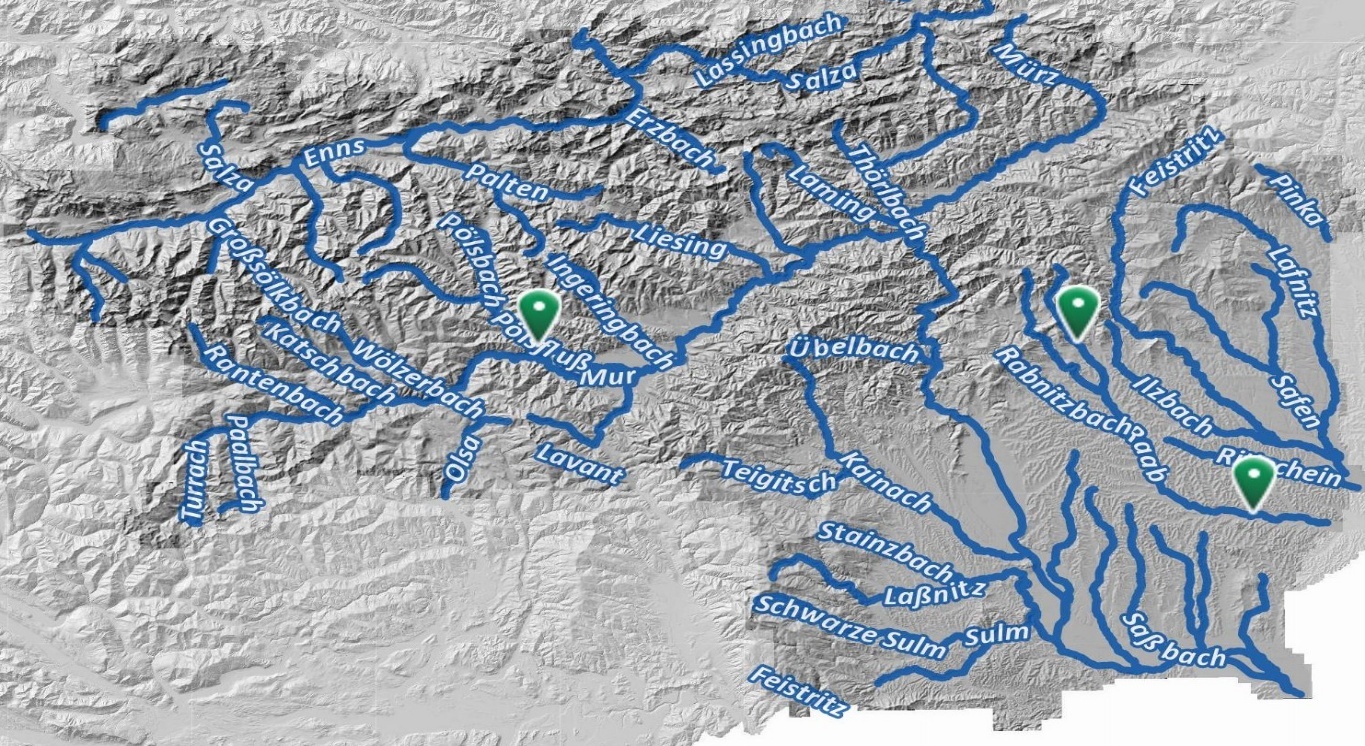
- Herbert Lugitsch u. Söhne Ges. mbH and E-Lugitsch Elektro GmbH (on the river Raab),
- Zellstoff Pöls AG (on the Pöls river), and
- Mosdorfer GmbH (on the Weizbach; see Figure 1).
3The enterprises were purposively selected from the approximately 70 hydropower-linked companies in the project’s database to illustrate distinct pathways – focus/niche positioning and differentiation, diversification, and expansion – under changing ownership, all of which have contributed to their entrepreneurial longevity. This purposive sampling is intended to highlight variation rather than statistical representativeness. Thus, the findings should be interpreted as illustrative and hypothesis-generating rather than broadly generalisable without further systematic research.
 Source: Digitaler Atlas GIS-Steiermark
2. Water-driven Economic Branches in Styria
1The region of Styria is 76 per cent mountainous, and 58 per cent of the total area is covered by forests (as shown in Figure 1).3 The mountainous topography and the Alpine climate in the northern and central parts – the south and southeast are subject to a more Pannonian climate – create an abundance of water: Styria is home to 6,675 flowing water bodies with a total length of 17,168 km.4 Similar figures apply to the entire territory of the Republic of Austria, which is why hydropower – especially since the end of World War I, when dozens of power plant projects were initiated due to the coal shortage – has played a central role in electricity production.5 The interplay of these environmental conditions – mountains, forests, and water – has shaped the region’s economic structure. The economic branches essentially influenced by water and water power, which attained major significance in the Styrian economy, shall be examined.
2.1. Corn mills and electricity
1The use of water power to grind grain is one of the earliest applications of machinery in human history. Beginning in the regions along the Rhine, the Moselle, and the Danube, watermills had spread throughout Europe by the twelfth century. The first watermills in Styria appeared as early as the second half of the eleventh century, although their prevalence did not increase significantly until the thirteenth century. By the end of the sixteenth century, many grain mills had been converted into scythe hammers, trip hammers, and wire-drawing mills, which required less charcoal and water than ironworks and could therefore operate on rivers with lower water flow. Following Werner von Siemens’s invention of the first practical electric generator in 1867, mills began to harness electricity for both power generation and to drive machinery.6 After 1880, the number of commercial mills declined sharply, primarily because of cheap grain imports from Hungary and the resulting reduction in grain cultivation in Styria. At the same time, large mechanised roller mills were established in the lowlands – especially in southern and south-eastern Styria – displacing smaller mills in the mountainous regions.7 From the 1890s onwards, larger mills also began supplying electricity to neighbouring enterprises or public grids. This diversification strategy ensured the survival of certain mills, which developed into large-scale operations,8 such as the Lugitsch family business in south-eastern Styria, which today is the largest electricity producer in the region and operates one of Austria’s largest feed mills (see the case studies below).9
2.2. Papermaking
1In the northern regions of the Alps, the first paper mills emerged towards the end of the 14th century. In Austria, the earliest documented mill was established in Lower Austria in 1469. The first Styrian paper mill was likewise founded in the 15th century, near the city of Graz10 – the Leuzendorf paper mill, which was purchased in 1793 by the printer and publisher Andreas Leykam and subsequently became the foundation of the largest paper manufactory in the Habsburg Monarchy – the later Leykam-Josefsthal AG.11 The rise of book printing led to growing demand for paper, prompting the establishment of numerous new paper mills. As part of the modernisation measures initiated by Empress Maria Theresa from 1754 onward and carried on by her son Joseph II, paper production quadrupled by 1798. However, shortages of rags and labour, as well as water scarcity and the freezing of rivers in winter, hampered production.
2Most newly founded paper mills were built along rivers, which provided both the necessary motive power and a timber supply via rafting. From the 1860s onward, paper began to be produced from wood fibres, and the abundance of forests in Styria became a decisive locational advantage for the expanding paper industry. In the following decades, numerous wood-grinding, cellulose, and pulp factories were established.12 One enterprise that evolved from a paper mill into a paper factory during this period was Johann Koch’s Pöls paper mill–today known as Zellstoff Pöls AG, the oldest paper producer in Styria (more on this below).13
2.3. Hammermills
1It is believed that the first water-powered hammer in Styria was operated by the Benedictine Abbey of Admont at the end of the 12th century. However, the earliest documented water hammer dates to 1290 in the Enns Valley.14 Between 1180 and 1290, iron ore processing increasingly shifted from the mountains to the valleys’ waterways, where water wheels powered bellows and forging hammers. By 1260, Styria’s iron industry was beginning to take shape – likely driven by shortages of charcoal and labour, which necessitated establishing hammer mills away from the Erzberg, along the Mur-Mürz Furrow and in the Enns Valley. The production centres of Vordernberg and Innerberg (modern-day Eisenerz) became focal points of this industry. In the 16th century, many iron hammers were converted into scythe hammers. High demand for scythes in the agricultural regions of the East and Southeast drove this transformation. Scythe hammers required less water and could therefore be established along smaller, less water-rich rivers in the valleys. However, as industrialisation favoured the accumulation and expansion of larger factories, smaller hammer mills began to fall behind. By the 1830s, competition from the increasingly dominant English iron and steel production had intensified. In response, Archduke John of Austria advocated the consolidation of Styria’s iron industry, a process realised only in 1881 with the founding of the Österreichisch-Alpine Montangesellschaft (Austrian Alpine Mining Company, ÖAMG).
2From the 1850s onward, the expansion of the Southern Railway improved access to coal, and steam power gradually replaced water power. By 1900, water power had been almost entirely displaced as a primary energy source, with only small-scale operations continuing to rely on it. However, water power returned in a modified form: water turbines were used to drive generators, producing electricity for iron and steelworks. In 1900, the ÖAMG constructed its own hydroelectric power plant for the Donawitz Steelworks on the Mur River to supply electricity for its operations.15 Small hammer mills could no longer compete in iron and steel production unless they occupied niche markets, as exemplified by Mosdorfer GmbH in Weiz, eastern Styria (more on this later in this paper).
3. Case Studies
3.1. Herbert Lugitsch u. Söhne Ges.mbH and E-Lugitsch Elektro GmbH
1In 1909, the miller and sawmill operator Florian Lugitsch acquired the estate of the Löscher family in Gniebing, southeastern Styria, which comprised a grain and oil mill, agricultural land, and a small hydroelectric plant. Previously, he had operated a mill and sawmill in nearby Grasdorf, also in southeastern Styria. Recognising the river Raab’s greater hydroelectric potential and the site’s existing railway connection, he opted to purchase the Löscher mill. Lugitsch had already grasped electricity’s transformative potential and, by 1913, had electrified the local railway station. Simultaneously, he secured early supply territories – and thus consumers for his self-generated power – by extending the network to the surrounding villages.16
2In the final weeks of World War II, combat occurred directly at the mill: the bridge and weir of the hydroelectric plant were blown up, the mill building was damaged by shellfire, and inventory, including grain, had been removed. Nevertheless, the hydroelectric plant and the mill were hastily restored to operation. In the face of acute food shortages, the Lugitsch family was able to provide flour, meat products from sheep husbandry, and electric power for themselves and parts of the surrounding region. The high demand for the family enterprise’s products17 during post-war reconstruction and the economic boom that began in the late 1940s18 propelled the business into rapid growth. Ten years later, the company began offering electrical installations, driven by the conviction that survival could not rely on electricity generation alone. Soon after, an electrical supply store was opened, initially focusing on selling electric motors to farmers and household appliances. To ensure the necessary voltage for motor operation, the distribution network was upgraded accordingly.
3At the same time, the company entered the animal feed sector, building a feed mill for poultry and pigs. At the end of the 1960s, the family business suffered a serious setback when a batch of feed was found to be contaminated with toxins. The affected feed and raw materials had to be destroyed, and the facilities thoroughly cleaned, halting production for a month. The incident eroded trust, which customers exploited to demand significantly lower prices. In response, Lugitsch decided to take over the slaughtering and sale of poultry themselves. The crisis was thus turned to their advantage, as evidenced by the expansion that began in 1971. Five years later, Lugitsch acquired an old estate, on which a layer-hen facility for 35,000 birds was established. Simultaneously, the mill was fully automated, and the grinding rights of three other mills were acquired. In 1982, a second hydroelectric plant was constructed south of the original facility. This expansion-driven growth brought about structural transformation. Although the agricultural and electrical divisions were managed by different family members, the company’s increased scale necessitated the formal separation of the enterprises. From 1984, Herbert Lugitsch managed the Herbert Lugitsch OHG (from 1989, Herbert Lugitsch u. Söhne Ges. mbH), overseeing meat and feed production (feed mill), while his brother Florian ran the Florian Lugitsch OHG (today E-Lugitsch Elektro GmbH), responsible for electricity generation, electrical installation, and trade.
4The year 1991 marked a pivotal moment in the company’s history, once again guided by strategic foresight and careful assessment. Austria’s impending accession to the European Union heralded the abolition of the so-called mill quota system – a fixed allocation of grinding rights – effectively liberalising the market. Anticipating that this would displace small mills in favour of industrial-scale operations, Lugitsch made the strategic decision to discontinue grain milling.19 History proved him right: whereas in 1995 there were still some 300 grain mills in Styria, by 2024 only a handful remained.20 The proceeds from the sale of the grain mill were reinvested – in the expansion of poultry processing and in the installation of the first pasteurisation plant in Europe within a feed mill. Investment momentum continued: in 1996, E-Lugitsch Elektro GmbH made its first investment in a photovoltaic system. In 1999, Herbert Lugitsch u. Söhne Ges. mbH acquired two feed mills and, once again, converted them into the first and, to this day, the most advanced organic feed mill in Europe. Steady investments in production facilities and structural expansion followed, generating further growth.
5In 2001, Herbert Lugitsch u. Söhne Ges. mbH acquired a stake in an energy firm and took over an egg production operation. By 2004, E-Lugitsch Elektro GmbH had opened an electrical installation business in Croatia, marking the company’s first step abroad. Subsequent acquisitions of two electrical installation and retail companies followed in 2008 and 2020. This long series of expansionary undertakings attests to the sustained success of the enterprises.21
3.2. Zellstoff Pöls AG
1Zellstoff Pöls AG is the oldest paper mill in Styria and the largest producer of speciality pulp and speciality papers in Central Europe.22 The company’s origins date back to 1700, when a paper mill commissioned by Prince Ferdinand von Schwarzenberg was completed on the Reifenstein estate – from then on, it was known as the “Reifensteiner paper mill”. Over the next three centuries, the mill frequently changed lessees, and only minimal investment was made in modernisation. As a result, following Empress Maria Theresa’s 1749 patent liberalising the paper industry, the mill was unable to keep pace with other paper producers. Like its competitors, it suffered from a chronic shortage of the most essential raw materials – rags and tatters. Its survival was secured only by a supply contract with the Graz government offices for chancery paper. Between 1867 and 1870, operations ceased entirely. Only after Johann Koch acquired the mill was production brought up to contemporary technical standards and the facility transformed into a factory. The installation of steam boilers, a new waterwheel, and a water-supply pumping system, together with the transition from rags to wood as the primary raw material – a decisive locational advantage in the forest-rich province of Styria – enabled the Pöls paper factory to catch up with its competitors23 and establish itself among the eight remaining paper producers in Styria.24 In 1888, a fire destroyed the entire factory, yet the owner, Johann Koch, turned the catastrophe into an opportunity to modernise and even expand the facility. He shifted production towards durable, high-quality grades of paper – a product line that continues to this day. However, the heavy investment costs overstrained Koch’s finances, and in 1901 he was forced to sell the mill to the Graz merchant David Stern, who, for similar reasons, sold it again just two years later to the Moravian industrialist Alfred Friedemann. Friedemann acquired numerous new machines, financing them almost entirely through debt. When the factory’s sales declined, he was unable to meet his creditors’ demands, and in 1910 ownership of the Pöls paper factory passed to the Styrian Escompte Bank.
2During World War I, production came to a halt due to a shortage of labour until the firm Moritz Mauthner & Sohn took over operations in 1917. Once again, the new owner undertook substantial investments, including the construction of a cableway linking the factory to the railway loading station. Yet once more, a lack of capital led to failure, as the collapse of the Habsburg Monarchy eliminated a large portion of the company’s market. The factory continued to operate at a loss.
3A turning point came in 1921, when the North Italian industrialist Luigi Burgo purchased the struggling plant to supply pulp to his Italian paper mills. The Italian paper industry faced a shortage of domestic timber, while Styria’s abundant forests ensured Pöls a stable market in Italy and thus its survival. Over the next six decades, the company prospered – thanks largely to the Burgo Group’s investments in the 1920s and 1930s and to capital infusion from the United States’ European Recovery Program (ERP, also known as “the Marshall Plan”) in the postwar period.25 The “oil price shock”, triggered by OPEC’s restriction of oil production after the Yom Kippur War in 1973, marked the beginning of the so-called “corrugated business cycle” (Wellblechkonjunktur) in Austria26 – high raw material prices and insufficient production capacity also weakened the Pöls paper factory. At the same time, the emerging environmental movement drew attention to the significant ecological impact of the paper industry, which was responsible for severe pollution due to high CO₂ and sulphur dioxide emissions, as well as the discharge of toxic acids and lignin into rivers.
4With substantial financial support from the Republic of Austria, the State of Styria, and the nationalised industry (VOEST-Alpine) – largely prompted by the federal government under Chancellor Bruno Kreisky – construction of a sulphate pulp mill began in 1980, to markedly reduce these environmental burdens. Liquidity problems within the Cartiere Burgo Group increased the state’s expenditure. Ultimately, the Italian management was replaced by Austrian executives, and the long-standing majority owner sold his shares to the national and Styrian governments. Construction costs for the sulphate pulp mill escalated, and technical difficulties during commissioning led to substantial corporate indebtedness. In 1984, the state industrial holding ÖIAG (Österreichische Industrie-Holding AG) acquired 90 per cent of the shares.
5As part of the restructuring and rehabilitation of the entire nationalised industry, the Pöls pulp factory was sold in 1988 to the Carinthian multinational Frantschach AG. With the rise of the Green political movement, the severe environmental impacts of the paper industry became a focal point of public debate. The company invested in more environmentally friendly processes to enhance productivity. Major investments included installing a biological wastewater treatment plant, adopting gentler chemical pulping methods, and improving water treatment. By the mid-1990s, these measures proved effective: Pöls had established itself as a low-cost producer of heavy-duty and speciality papers in Europe.27
6In 2000, the next change of ownership occurred when the Austrian Heinzel Group acquired the Pöls pulp factory.28 The acquisition was motivated by the site’s specialisation in high-quality speciality and heavy papers, which the group sought to integrate into its portfolio. The strategic objective was to secure the location in the long term, achieved through investments to increase efficiency and productivity and to ensure a high level of energy self-sufficiency. Under the “Pöls 500+” project – referring to the production of over 500,000 tons of paper annually – a biomass power plant and a hydroelectric plant were constructed, raising the self-sufficiency rate to 90 per cent. Productivity improvements were further supported by the acquisition of a majority stake in a pulp mill in Paskow, Czech Republic,29 and the installation of new paper machines in 2013 and 2019.30
7Under Heinzel Group management, the oldest paper mill in Styria consolidated after two turbulent decades and emerged as Central Europe’s leading producer of speciality pulp.
3.3. Mosdorfer GmbH
1Mosdorfer GmbH – the parent company of today’s Knill Group – is a family enterprise based in Weiz, eastern Styria, with a history spanning more than 350 years. It has evolved from a blade smithy into an international corporation specialising in the production, installation, and maintenance of fittings for overhead transmission lines in the energy and railway sectors, as well as in electrical distribution cabinets.31 The group employs nearly 1,500 people worldwide.32 Around 150 people work at the company’s site in Weiz, which dates back to the 15th century.33
2The oldest iron hammer forge on the Weizbach is documented from 1425, when the Krottendorfer family of smiths operated a blade forge there. Conditions for ironworking in the Weiz region were highly favourable: abundant forests provided charcoal, the local ore was of good quality, and the warm tributary feeding the Weizbach ensured ice-free water throughout the year. From 1577 onward, the blade smithy supplied the Styrian Estates with weapons to defend against Ottoman incursions.34
3In 1712, the Bavarian swordsmith Josef Mosdorfer acquired the forge, marking the beginning of the Mosdorfer-Knill family enterprise.35 The fine reputation of Weiz blades soon attracted major orders from the imperial court in Vienna. During the War of the Austrian Succession (1740–1748) and the Seven Years’ War (1756–1763), several cavalry regiments of the imperial army were equipped with sabres, while the infantry received bayonets and gun barrels.36
4In 1784, Anton Mosdorfer expanded the workshop by adding a scythe forge, convinced that manufacturing swords, bayonets, and barrels alone would not ensure the company’s long-term survival. This foresight and decision to diversify proved remarkably astute in light of later developments in weapons technology. By 1800, the forge was producing more than 130,000 scythes annually, and scythe-making had become its principal business.37
5Balthasar Mosdorfer, representing the next generation, diversified further, establishing in 1833 a refining hammer forge to shape iron rods, bars, and sheets for further processing. In 1847, he built a second sickle hammer on the Weizbach, increasing production to over 200,000 scythes. In 1862, Mosdorfer acquired an old horseshoe forge and converted it into a flattening hammer mill, where metals were smoothed and formed for various uses.
6From 1868 onwards, the Weizbach forges adopted the newly invented Bessemer process for steel production. This innovation enabled the direct forging of cast workpieces, for which Styrian iron – unlike that from the Rhineland and Westphalia – was particularly well suited.38 Production costs fell considerably, and by 1870, 386,650 scythes were being forged and exported to Bohemia, Moravia, Germany, Hungary, and even America.39
7In 1890, the family enterprise was divided between the brothers Franz and Josef. Franz took over the large and tool hammer works, where anvils, ship anchors, and a range of forged tools, both large and small, were produced, while Josef managed the sickle factory. Following Franz’s death in 1905, his branch of the business dissolved, whereas under Josef’s successor, Moriz Mosdorfer, the scythe factory expanded significantly. In the 1920s and 1930s, Mosdorfer exported sickles and scythes to South America, the United States, and across Europe.
8During World War II, Mosdorfer manufactured axes, sickles, and scythes for Austrian and German agriculture, employing prisoners of war as labourers. The immediate postwar years brought a short-lived boom: as agriculture revived, demand for scythes surged. Yet from 1948 onward, as mechanisation spread through farming, demand fell sharply. In this precarious period of transition, the company sought new strategies – producing knives, forks, pliers, hoes, harrows, and other tools. By 1950, Mosdorfer was even manufacturing machetes, which initially sold very successfully in Mexico and Argentina. However, in 1956, 40 per cent import duties were imposed, bringing the machete venture to an abrupt end.
9Salvation, however, had already arrived in 1949. Despite lacking the necessary expertise and production capacity, Mosdorfer was awarded the contract to manufacture components for the high-voltage transmission lines of a section of the Kaprun hydroelectric power plant in Tyrol.40 The engineer Friedrich Knill – husband of the company’s heir, Herta Mosdorfer – who had led the company since 1938 and had acquired electrical engineering expertise through his work at the motor manufacturer ELIN in Weiz41 – was able to bring the project to a successful conclusion, marking the beginning of a completely new – and still ongoing – product focus. In 1956, the remaining stock of sickles, axes, and other inventory from the sickle forge was sold. From then on, the forge produced components for high-voltage transmission lines, which were delivered to Syria, India, Pakistan, Belgium, the United States, Germany, and Bulgaria. In the same year, Friedrich Knill became a partner in the company; from then on, the Knill family managed its operations.
10By the 1970s, Gunther Knill had taken over the family business. He introduced new production methods and expanded the factory premises to meet rising order volumes. In 1982, a hot-dip galvanising facility was established, laying the foundation for a new business segment: galvanising services for third parties.
11A strategic milestone was reached when Mosdorfer acquired a major competitor, the Vorarlberg-based company Lorünser, which had extensive expertise in producing fittings for overhead transmission lines. This acquisition marked the start of an expansion phase characterised by numerous takeovers and equity investments. The majority stake acquired in 1986 in a local bakery machinery manufacturer was motivated by a weak order situation, with diversification intended to offset the downturn.
12Due to low-capacity utilisation, the company expanded into the United Kingdom by acquiring Lorünser’s product representation there and selling products specifically developed for the British market. The following year, a sales office was opened in the Federal Republic of Germany. Another diversification step – one that proved successful – was the acquisition of an electrical engineering company in Vienna, specialising in cable and power distribution boxes. The company, renamed Elsta-Mosdorfer GmbH, marked the group’s entry into the energy transmission sector.
13Following these steps in market penetration, expansion and diversification, the production of labour-intensive electrical products was relocated to Slovakia, where a new plant was established. A year later, Knill-Holding GmbH, by then a fully fledged group, acquired two insolvent companies of the Assmann Group in south-western Styria, which manufactured plastic cable distribution boxes – until then, Mosdorfer had produced only metal boxes. The company also acquired the Swiss EA Elektroarmaturen AG in Schaffhausen to strengthen its market penetration in Switzerland.42 The group further increased its market share in the cable sector by acquiring the Lower Austrian company Rosendahl Maschinen GmbH – at the time the world’s second-largest manufacturer of cable machinery – and the German firm Frisch Verseilmaschinen GmbH. In the cable and wire segment, the Knill Group continued its expansion strategy in 1998 and 1999 by acquiring five additional companies in England, France, Germany, and Poland.
14The course remained firmly set on growth. To implement this strategy more effectively, the group was reorganised into a three-part holding structure: ETK (Electrical Engineering), KDS (Cable and Wire Systems) – which included the parent company Mosdorfer – and BTK (Bakery Technology), which was later integrated into the KDS segment.43 In 2008, the company joined the ranks of the world’s leading suppliers of fittings for overhead transmission lines through the acquisition of the Italian specialist in vibration dampers, DAMP Srl., and the establishment of the subsidiary Mosdorfer India GmbH, marking its entry into the Indian market. The most recent acquisition in 2021 opened yet another sales market: the railway division of the German Pfisterer Group. Renamed Mosdorfer Rail, the subsidiary now produces line systems, insulators, and connectors for the rail and metro sectors.44
4. Analysis
1After this whirlwind journey through the histories of these three long-standing Styrian companies, the question arises: what accounts for their rise and enduring longevity? But first, let’s look at an essential common thread. The entrepreneurial beginnings of all three companies were rooted in hydropower – in operating mills – and from there their activities gradually expanded and diversified: into blade and scythe forging, energy supply, electrical trade and installation, and eventually into cellulose production, and so on. Hydropower was, in other words, part of the very DNA of all these companies; it inspired entrepreneurial activity of many kinds. However, the fact remains that this – undoubtedly important – starting point alone was by no means enough to secure the long-term survival of the companies. Other factors were also needed, which will be analysed in the following.
2To analyse the secrets of long-established traditional companies, i.e., the reasons for their longevity, the University of Graz uses a special “compass”. The model is called the “Graz approach”.45 This approach closely links business history to strategic corporate management and examines the reasons behind the success or failure of business activities. Success is defined here as the strategic creation of future viability, that is, the longevity of a company.
3The “Graz approach” comprises several theoretical components: first, elements of the “general management model”, developed by the Austrian manager and management theorist Fredmund Malik. Malik conceives of enterprises as organically evolving systems that, in the spirit of cybernetics, can be guided and regulated accordingly. Within such a dynamic and complex environment, the leader acts as the helmsman, shaping the strategy, structure, and culture of the organisation to fulfil its essential purpose: the sustained existence of the enterprise itself–rather than, as is often advocated in U.S. business philosophy, the pursuit of maximum profit in the shortest possible time.46 Building on Malik’s concept, the subject area of Economic and Social History at the University of Graz also applies additional theoretical frameworks to the classification and analysis of corporate historical events and processes – namely, Michael Porter’s theory of competitive strategy47 and Alfred D. Chandler’s concept of “structure follows strategy”, introduced in his seminal 1962 work Strategy and Structure.48In addition, there are issues relating to corporate culture, which stem from Herbert Matis’s categorisations49but are less relevant to this paper.
4For reasons of space, the following analysis will focus exclusively on the strategic dimension, with particular attention to the role hydropower played in the rise of the companies under study and to the managerial decisions that led to their success – understood in this context as their longevity. Meanwhile, the term strategy is understood as “the determination of the basic long-term goals and objectives of an enterprise, and the adoption of courses of action and the allocation of resources necessary for carrying out these goals”.50 It should be noted at the outset that five main strategic directions can be identified based on the case studies: focus/niche positioning, diversification, expansion, differentiation and the advantage of the early mover. Furthermore, at some stages, success was simply a matter of sheer chance and luck.
4.1. The advantage of the early mover
1It can first be stated in general terms that the foundation of entrepreneurial success in the early years of these companies rested on the energy source of water and the right – that is, the necessary licences – to use the water for the respective purpose, without which the respective business models would not have been viable and which gave all three of them a crucial advantage – the advantage of the first or early mover, as Porter suggests.51 Even as hydropower was increasingly displaced by coal, it re-emerged indirectly: in the case of the family-owned company Lugitsch, through electricity generation, which constitutes a “secure sales base” in the company’s history.
2Similarly, Zellstoff Pöls AG built a new hydropower plant in the 1990s to achieve a high degree of self-sufficiency in the energy-intensive paper production process, thereby keeping production costs low. For Zellstoff Pöls AG, the “advantage of the early mover” is further reinforced by the long-term advantage of its location, specifically the early establishment and modernisation of the production site, which made the paper mill attractive to major investors. The long-term survival of Zellstoff Pöls is also attributable to the strategic decisions of the respective management teams. However, one must ask whether it is more appropriate to speak of continuity of the site rather than continuity of the company itself, especially in light of the comparatively frequent changes in ownership. In this context, it is important to emphasise that Lugitsch and Mosdorfer remained family-run businesses throughout their history. In contrast, Zellstoff Pöls was subject to constant changes in ownership from the very beginning.
3In the case of Mosdorfer GmbH, hydropower no longer served directly as an energy source but rather as an “indirect” strategic turning point: the order to produce overhead line components for the Kaprun storage power plant marked the start of a strategic realignment52 that enabled the company to occupy a niche, which has since underpinned its remarkable growth.
4.2. Focus or niche positioning and differentiation
1All three companies share the characteristic of consciously or unconsciously pursuing a strategy of achieving niche positioning throughout their histories. However, the significance of the concept of a “niche” varied with the temporal context. The founder of the Lugitsch family business, Florian Lugitsch, recognised the potential of electricity as early as 1909 and chose to enter the power supply sector – a true niche market at that time. In agriculture, the company occupied the organic segment early on, selling off milling rights in 1995 in anticipation of EU accession and, from 1999, becoming the first feed mill in Europe to produce organic animal feed.
2Reifensteiner Paper Mill survived into the industrial age only by occupying a niche: supplying chancery paper to the Graz court. When transitioning from rags to wood pulp as the raw material for paper, the moderniser Johann Koch’s 1870 decision to specialise in solid board alongside pulp production created a market niche that remains central to the company today. In both areas, pulp and speciality paper, the company emphasises very high quality and customer-specific production. In this context, the company seeks to further distinguish itself within the niche market through differentiation.
3Mosdorfer GmbH likewise occupied a niche market in its early years, enjoying the privilege of supplying high-quality blades, sabres, bayonets, and gun barrels to the Styrian Estates and, later, the imperial army. Its current core business – manufacturing overhead line fittings – exemplifies a niche strategy. Within this niche, Mosdorfer further diversified by integrating business areas closely aligned with its existing expertise, such as the construction of railway line systems.
4.3. Diversification53
1Diversification strategies are most pronounced in Lugitsch’s history, somewhat less so at Mosdorfer, and virtually absent at Zellstoff Pöls, where diversification occurred only once, when Johann Koch decided to enter solid board production in 1870 (see above). Diversification is deeply rooted at Lugitsch; upon acquiring the mill and the power plant in 1909, the company already encompassed both agriculture and electricity. Both areas saw further diversification over time: in electricity, with entry into electrical installation and trade in the late 1950s; in agriculture, through feed production in the same decade and the 1971 decision to produce market chicken meat independently, thereby reducing dependence on trade. Lugitsch leveraged its experience in sales and poultry farming when acquiring an egg producer in 2001. The switch to organic feed and high-quality organic chicken production marked the final step of this vertical diversification strategy, covering the entire production process from feed to end product.
2Mosdorfer’s first diversification occurred in 1784, when Anton Mosdorfer anticipated the long-term decline of the armaments forge and began producing scythes (thereby serving both civilian and military demand). Under Balthasar Mosdorfer, further steps were taken, including the establishment of forges for various iron products such as anvils, ship anchors, rods, and pipes. During the post-World War II technological transformation in agriculture, the company attempted to sustain itself by producing a wide range of agricultural implements, including a rather peculiar episode involving the export of machetes. The breakthrough came almost by chance when Friedrich Knill successfully completed the Kaprun storage power plant order, leveraging his electrical engineering expertise and the company’s collective blacksmithing know-how. The introduction of bakery machinery production in 1982 arose from concerns over poor order levels, yet the company remained anchored in its technological core, entering electricity distribution through the production of distribution cabinets.
4.4. Expansion
1Expansion strategies were particularly significant for Mosdorfer GmbH and Lugitsch, whereas Zellstoff Pöls served as an expansion vehicle within the corporate structure. Lugitsch built a regional electricity network as early as 1913, which was continually expanded. The electrical installation, electrical trade, and agricultural divisions grew through the acquisition of smaller regional companies. The opening of a branch in Croatia in 2004 was an exception.
2Acquisition-driven expansion played no role in Zellstoff Pöls AG’s history, as recurring liquidity issues periodically threatened the company’s continuity. Growth occurred only through productivity gains, achieved through prior modernisation – particularly under Johann Koch (1870–1905) and, from the 1920s until the late 1970s, under Cartiere Burgo. The structural crisis of the 1980s was overcome only through substantial state support. The acquisition by Frantschach AG further stabilised the company. It was only when the Heinzel Group purchased the paper and pulp mill in 2000 that significant productivity-driven growth resumed, driven by cost-reducing investments in energy infrastructure and productivity-enhancing measures, such as the purchase of new paper machines.
3Mosdorfer’s productivity growth was already evident under Balthasar Mosdorfer, who significantly boosted scythe production by introducing the Bessemer process, enabling worldwide exports. Acquisition-driven expansion began only in 1985, with Gunther Knill’s takeover of competitor Lorünser. From that point, the company pursued a consistent strategy of market share growth, primarily through the acquisition of competitors and technological leaders. The results of this expansion are impressive: 25 locations in Europe, three in Asia, two in the Americas, and one in Australia.
5. Conclusion
1The fact that around 70 companies (more than 20 per cent) in the database of “centenarian” companies in Styria, described at the beginning, have a direct connection to hydropower in their history and, to a large extent, still do today speaks volumes: water, a natural resource, was and remains an essential building block in the development of the business location. The case studies of Lugitsch, Zellstoff Pöls, and Mosdorfer show that various strategies were responsible for the longevity of these companies, some of which moved away from hydropower, while others had nothing to do with it at all. Nevertheless, it should be noted that without the original idea of using hydropower economically, these traditional companies would most likely never have been founded. The companies presented as case studies show very different developments and orientations. What they all have in common, however, is that they repeatedly secured their competitiveness and thus their long-term survival by making pioneering strategic decisions at decisive historical crossroads. Many enjoyed the advantage of being pioneers, at least regionally, particularly in the use of hydropower, which in turn reflected their keen business acumen. In the case of Zellstoff Pöls, as already mentioned, it was primarily the location and the early modernisation of the factory – and thus the “advantage of the early mover” – that proved decisive. Company leaders also demonstrated this business sense when guiding their companies through the various uncertainties of history and through economic and social transformations. They succeeded by tapping into niche markets and by pursuing diversification and differentiation – in steps that were (in retrospect) understandable, without straying too far from their original core competencies. Expansion was also an essential strategy, with Lugitsch and Mosdorfer actively pursuing it, while Zellstoff Pöls, which changed hands more frequently, profited primarily from its well-established location.
2It was stated that questions about longevity were analysed using a specific approach (the “Graz approach”), which in turn draws on various models and theories.54 As several studies and their findings show, this approach has proven itself to date. Nevertheless – and this is where the humanities aspect of our research comes to the fore – we must warn against slipping exclusively into a process- and model-based approach. Not all developments can be explained in this way. It is not uncommon for luck (usually the famous “fortune of the brave”) and fateful chains of events to underpin long-term entrepreneurial success (as shown by the example of Mosdorfer in the late 1940s).
6. Acknowledgements
1The project, funded by the Styrian Provincial Government, ran from April 2024 to December 2025 at the Institute of History at the University of Graz. Project team: Walter M. Iber and Thomas Krautzer (Project Lead); Christian G. Schmidt and Katharina Bergmann-Pfleger (Project Coordination); Moritz Hillinger, Romina Volkheimer, Daniel Buchegger and Michaela Tasotti (Project Assistance).
Sources and Literature
- Brunner, Walter. 300 Jahre Papier. Von der Reifensteiner Papiermühle zum Sulfatzellstoffwerk Pöls. Pöls: Im Eigenverlag der Zellstoff Pöls AG, 1989.
- Butschek, Felix. Österreichische Wirtschaftsgeschichte. Von der Antike bis zur Gegenwart. Wien, Köln, Weimar: Böhlau Verlag, 2011.
- Chandler, Alfred. Strategy and Structure. Chapters in the History of the Industrial Enterprise. Cambridge: The M.I.T. Press, 1962.
- Datenbank zu den Steirischen Traditionsunternehmen 100+ (forthcoming).
- Froihofer, Waltraud. Knill. Chronik einer erfolgreichen Firmengruppe. Weiz: Knill Holding GmbH, 2001.
- Hufschmied, Richard. “‘Weißes Gold’ in (Deutsch-)Österreich – Kontinuität und Wandel mit dem Epochenjahr 1918.“ In Wasserkraft. Elektrizität. Gesellschaft. Kraftwerksprojekte ab 1880 im Spannungsfeld. Edited by Oliver Rathkolb, Richard Hufschmied, Andreas Kuchler, and Hannes Leidinger, 84–143. Wien: Verlag Kremayr & Scheriau, 2012.
- Iber, Walter M. “Die Schuhfabrik Köflach und die Skischuhmarke Koflach – Aufstieg, Boom, Niedergang.“ In Sport, Prestige, Profit. Historische Betrachtungen zum Run auf Ruhm und Reichtum. Edited by Walter M. Iber, Johannes Gießauf, Harald Knoll, and Peter Mauritsch, 235–64. Baden–Baden: Academia, 2024.
- Iber, Walter M. “The Graz Approach” to business history. Evidence from the Austrian steel and ski industries (forthcoming).
- Iber, Walter M. and Thomas Krautzer. “Geschichte als strategische Ressource.”Business History Monat (November 2025): 50–54.
- Iber, Walter M. and Thomas Krautzer. “Steiermark 1985–2008: Vom alten Industriegebiet zum modernen Wissensraum – eine Projektvorstellung.” In Wirtschaft und Region. Transformationsprozesse im internationalen Vergleich. Edited by Walter M. Iber and Thomas Krautzer, 27–77. Wien: LIT Verlag, 2021.
- Karner, Stefan. Die Steiermark im 20. Jahrhundert. Graz: Leykam, 2005.
- Knill, Christian. “Firmengruppe Knill-Mosdorfer. Eine historische Betriebsanalyse.” Master's thesis, University of Graz, 1998.
- Krautzer, Thomas. “Unternehmertum und Wasserkraft – Ein historischer Rückblick.” Business History Monat (November 2024): 10–14.
- Kropač, Ingo H. “Zum frühen Mühlenwesen in der Steiermark.“ In Gerhard M. Dienes and Franz Leitgeb, eds.,Wasser. Ein Versuch, 134–36. Graz: Leykam, 1990.
- Lacina, Ferdinand, Dionys Lehner, Peter Mitterbauer, Andreas Resch, Roman Sandgruber, and Gertrude Tumpel-Gugerell. Österreichische Industriegeschichte 1955 bis 2005. Die ergriffene Chance. Wien: Verlag Carl Ueberreuter, 2005.
- Mathieu, Jon. The Alps. An Environmental History. Cambridge, Medford: Polity Press, 2019.
- Mathis, Franz. Big Business in Österreich. Österreichische Großunternehmen in Kurzdarstellungen. München: Oldenbourg, 1987.
- Matis, Herbert. “‘Corporate Identity’” und ‘Corporate Culture’.” In Corporate Identity und Geschichtsbewusstsein. Edited by Alois Mosser, 75–111. Wien: Veröffentlichungen der Österreichischen Gesellschaft für Unternehmensgeschichte, 1994.
- Malik, Fredmund. Management. Das A und O des Handwerks. Frankfurt, New York: Campus Verlag, 2007.
- Pekari, Wilhelm. “Die Zellstoff Pöls AG – eine historische Betriebsanalyse. Mit einem Schwerpunkt zwischen 1994 und 2006.” Master's Thesis, University of Graz, 2008.
- Porter, Michael E. Competitive Strategy: Techniques for Analyzing Industries and Competitors: With a New Introduction. New York: Free Press, 1980.
- Reismann, Bernhard and Johann Wiedner. “Wasser Treibt Mühlen und Hammerwerke.” In Wasserwirtschaft in der Steiermark. Geschichte und Gegenwart. Edited by Josef Riegler, 157–86. Graz: Veröffentlichungen des Steiermärkischen Landesarchivs, 2015.
- Rieger, Andrea. “Er haucht der 400 Jahre alten Mühle in Deutschfeistritz neues Leben ein.” Kleine Zeitung, 30. 3. 2024. Accessed 9. 10. 2025. https://www.kleinezeitung.at/steiermark/graz/18320583/er-haucht-der-400-jahre-alten-muehle-in-deutschfeistritz-neues-leben.
- Sandgruber, Roman. Ökonomie und Politik. Österreichische Wirtschaftsgeschichte vom Mittelalter bis zur Gegenwart. Wien: Ueberreuter, 1995.
- Schmidt, Christian. “Die Ankünder GmbH. Wirtschaftsentwicklung, Eigentümerstruktur und Werbekommunikation über 100 Jahre.” Master's thesis, University of Graz, 2024.
- Seunig, Markus. “Die Historie der Rucksackmarke ‚Kamarg‘. Unternehmensgeschichte im Spannungsfeld von wirtschaftlichen, gesellschaftlichen und politischen Wandlungsprozessen.” Master's thesis, University of Graz, 2024.
- Volkheimer, Romina. “Die Herbert Lugitsch u. Söhne Ges. mbH. Eine historische Betriebsanalyse.” Master's thesis, University of Graz, 2024.
- Das Land Steiermark Umwelt. “Oberflächengewässer.” Accessed 2. 10. 2025. https://www.umwelt.steiermark.at/cms/ziel/602965/DE/.
- Digitaler Atlas GIS - Steiermark
- heinzelpöls. “Geschichte.” Accessed 9. 10. 2025. https://www.heinzelpoels.com/ueber-uns/geschichte/.
- Landesstatistik Steiermark. “Geografische Übersichten.” Accessed 2. 10. 2025. https://www.landesentwicklung.steiermark.at/cms/beitrag/11679864/141979459/.
- Mosdorfer Knill Gruppe. “Unsere Meilensteine.” Accessed 17. 10. 2025. https://www.mosdorfer.com/unsere-meilensteine/.
- Wirtschaftscompass. “Knill Energy Holding GmbH.” Accessed 12. 10. 2025. https://app.wirtschaftscompass.at/WirtschaftsCompass/profile/company/5d124842-b01b-4893-94cf-c699f9806575.
- Wirtschaftscompass. “Mosdorfer GmbH.” Accessed 12. 10. 2025. https://app.wirtschaftscompass.at/WirtschaftsCompass/profile/company/d97411c0-8d17-4f9f-a760-a398e3a6f920.
Walter M. Iber
Christian G. Schmidt
HIDROENERGIJA IN PODJETNIŠTVO
ŠTUDIJE PRIMEROV IZ ŠTAJERSKE
POVZETEK
1V članku je obravnavana vloga, ki jo je imela hidroenergija pri ustanavljanju in dolgoživosti tradicionalnih podjetij na Štajerskem. Analizirani so bili trije primeri podjetij, katerih nastanek je tesno povezan z izkoriščanjem hidroenergije: Herbert Lugitsch u. Söhne Ges. mbH in E-Lugitsch Elektro GmbH, Zellstoff Pöls AG ter Mosdorfer GmbH.
2Štajerska je zaradi topografskih in podnebnih razmer bogata z vodotoki, kar je že od srednjega veka naprej spodbujalo postavljanje vodnih mlinov in kladivnih drobilnikov, pozneje pa tudi ustanavljanje industrijskih podjetij. Hidroenergija je tako predstavljala odločilno lokacijsko prednost in je bila podlaga za ustanovitev številnih podjetij. Pomen hidroenergije se je sčasoma spremenil. Sprva je služila predvsem kot vir energije, pozneje pa je z elektrifikacijo in gradnjo hidroelektrarn postala strateški dejavnik za energetsko samostojnost in zmanjšanje stroškov.
3Študije primerov kažejo, da sama uporaba hidroenergije ni zadostovala za zagotavljanje dolgoročnega poslovnega uspeha. Preživetje in rast teh podjetij so v resnici omogočile strateške odločitve, kot so diverzifikacija, osredotočenost/nišno pozicioniranje, širjenje in diferenciacija. Podjetje Lugitsch se je na primer že zgodaj razširilo na področje proizvodnje in trgovanja z električno energijo, pozneje pa tudi na proizvodnjo krme in mesa, pri čemer se je osredotočilo na ekološke proizvode. Podjetje Zellstoff Pöls se je specializiralo za posebne visokokakovostne vrste papirja in vlagalo v sodobne, okolju prijazne proizvodne procese, pri čemer je bila lokacijska prednost odločilna skozi celotno zgodovino podjetja. Podjetje Mosdorfer se je iz kovačnice orožja razvilo v proizvajalca kos in kmetijske opreme, sčasoma pa je postalo mednarodni dobavitelj komponent za visokonapetostne vode in železniško tehnologijo.
4Ob analizi zgodovine podjetij, ki so uporabljala “graški pristop”, postane jasno, da je bila za njihovo dolgoživost odločilna sposobnost prilagajanja spreminjajočim se tržnim razmeram (osredotočenost/nišno pozicioniranje, diferenciacija), odpiranja novih poslovnih področij (diverzifikacija) ter izkoriščanja tehnoloških inovacij. Pomembno vlogo je imela tudi prednost, da so bila ta podjetja “pionirji” – torej zgodnja uporaba hidroenergije in s tem povezane lokacijske prednosti. Treba je poudariti, da so poleg strateškega načrtovanja k temu prispevali tudi sreča in ugodna naključja (kot je na primer vstop podjetja Mosdorferjev v proizvodnjo komponent za elektrarno v Kaprunu). Študija kaže, da je trajnostni uspeh analiziranih podjetij temeljil na kombinaciji naravnih virov, podjetniške daljnovidnosti, strateške prožnosti in, v nekaterih primerih, naključja.
* Prof. Dr., Institute of History, University of Graz, Attemsgasse 8, 8010 Graz; walter.iber@uni-graz.at; ORCID: 0000-0002-2567-1500
** BA BA MA, Institute of History, University of Graz, Attemsgasse 8, 8010 Graz, christian.schmidt@uni-graz.at; ORCID: 0009-0005-0745-0738
1. Institute of Contemporary History, Ljubljana, 23 and 24 October 2025.
2. For a summary of the Graz approach, see Walter M. Iber and Thomas Krautzer, “Geschichte als strategische Ressource,”Business History Monat (November 2025): 50–54. For more on the concept, structure, and results of this approach, see Walter M. Iber, “Die Schuhfabrik Köflach und die Skischuhmarke Koflach – Aufstieg, Boom, Niedergang,” in Walter M. Iber, Johannes Gießauf, Harald Knoll and Peter Mauritsch, eds., Sport, Prestige, Profit. Historische Betrachtungen zum Run auf Ruhm und Reichtum (Baden–Baden: Academia, 2024), 235–64. See also the following theses: Romina Volkheimer, “Die Herbert Lugitsch u. Söhne Ges. mbH. Eine historische Betriebsanalyse” (Master's thesis, University of Graz, 2024). Markus Seunig, “ Die Historie der Rucksackmarke ‘Kamarg’. Unternehmensgeschichte im Spannungsfeld von wirtschaftlichen, gesellschaftlichen und politischen Wandlungsprozessen” (Master's thesis, University of Graz, 2024). Christian Schmidt, “Die Ankünder GmbH. Wirtschaftsentwicklung, Eigentümerstruktur und Werbekommunikation über 100 Jahre” (Master's thesis, University of Graz, 2024).
3. Landessstatistik Steiermark, “GeografischeÜbersichten,” accessed on 2 October 2025, https://www.landesentwicklung.steiermark.at/cms/beitrag/11679864/141979459/.
4. Das Land Steiermark Umwelt, “Oberflächengewässer,” accessed on 2 October 2025, https://www.umwelt.steiermark.at/cms/ziel/602965/DE/ .
5. Richard Hufschmied, “‘Weißes Gold’ in (Deutsch-)Österreich – Kontinuität und Wandel mit dem Epochenjahr 1918,” in Oliver Rathkolb, Richard Hufschmied, Andreas Kuchler, and Hannes Leidinger, eds., Wasserkraft. Elektrizität. Gesellschaft. Kraftwerksprojekte ab 1880 im Spannungsfeld (Wien: Verlag Kremayr & Scheriau, 2012).
6. Jon Mathieu, The Alps. An Environmental History (Cambridge, Medford: Polity Press, 2019), 117.
7. Bernhard Reismann and Johann Wiedner, “Wasser Treibt Mühlen und Hammerwerke,” in Josef Riegler, ed.,Wasserwirtschaft in der Steiermark. Geschichte und Gegenwart (Graz: Veröffentlichungen des Steiermärkischen Landesarchivs, 2015), 158.
8. Ibidem, 161.
9. Volkheimer, “Die Herbert Lugitsch u. Söhne Ges. mbH,” 38.
10. Reismann and Wiedner, “Wasser treibt Mühlen und Hammerwerke,” 175.
11. Franz Mathis, Big Business in Österreich. Österreichische Großunternehmen in Kurzdarstellungen (München: Oldenbourg, 1987), 186.
12. Reismann and Wiedner, “Wasser treibt Mühlen und Hammerwerke,” 175–78.
13. Thomas Krautzer, “Unternehmertum und Wasserkraft – Ein historischer Rückblick,” Business History Monat (November 2024), 13.
14. Roman Sandgruber, Ökonomie und Politik. Österreichische Wirtschaftsgeschichte vom Mittelalter bis zur Gegenwart (Wien: Ueberreuter, 1995), 21.
15. Reismann and Wiedner, “Wasser treibt Mühlen und Hammerwerke,” 178–82.
16. Volkheimer, “Die Herbert Lugitsch u. Söhne Ges. mbH.,” 14–15.
17. Ibid., 16–24.
18. Felix Butschek, Österreichische Wirtschaftsgeschichte. Von der Antike bis zur Gegenwart (Wien, Köln, Weimar: Böhlau Verlag, 2011), 292.
19. Volkheimer, “Die Herbert Lugitsch u. Söhne Ges. mbH.,” 24–27.
20. Andrea Rieger, “Er haucht der 400 Jahre alten Mühle in Deutschfeistritz neues Leben ein,” Kleine Zeitung, 30 March 2024, accessed on 9 October 2025, https://www.kleinezeitung.at/steiermark/graz/18320583/er-haucht-der-400-jahre-alten-muehle-in-deutschfeistritz-neues-leben.
21. Volkheimer, “Die Herbert Lugitsch u. Söhne Ges. mbH.,” 28–30.
22. Krautzer, “Unternehmertum und Wasserkraft,” 13.
23. Brunner, 300 Jahre Papier, 42–51.
24. Stefan Karner, Die Steiermark im 20. Jahrhundert (Graz: Leykam, 2005), 57.
25. Wilhelm Pekari, “Die Zellstoff Pöls AG – eine historische Betriebsanalyse. Mit einem Schwerpunkt zwischen 1994 und 2006” (Master's thesis, University of Graz, 2008), 18–20.
26. Walter M. Iber and Thomas Krautzer, “Steiermark 1985–2008: Vom alten Industriegebiet zum modernen Wissensraum – eine Projektvorstellung,” in Walter M. Iber and Thomas Krautzer, eds.,Wirtschaft und Region. Transformationsprozesse im internationalen Vergleich (Wien: LIT Verlag, 2021), 36.
27. Pekari, “Die Zellstoff Pöls AG,” 33–45.
28. Ferdinand Lacina et al., Österreichische Industriegeschichte 1955 bis 2005. Die ergriffene Chance (Wien: Verlag Carl Ueberreuter, 2005), 282.
29. Pekari, “Die Zellstoff Pöls AG,” 33–49.
30. Heinzelpöls, “Geschichte,” accessed on 9 October 2025, https://www.heinzelpoels.com/ueber-uns/geschichte/.
31. “Mosdorfer GmbH,” in Datenbank zu den Steirischen Traditionsunternehmen 100+ (forthcoming).
32. Wirtschaftscompass, “Knill Energy Holding GmbH,” accessed on 12 October 2025., https://app.wirtschaftscompass.at/WirtschaftsCompass/profile/company/5d124842-b01b-4893-94cf-c699f9806575.
33. Wirtschaftscompass, “Mosdorfer GmbH,” accessed on 12 October 2025, https://app.wirtschaftscompass.at/WirtschaftsCompass/profile/company/d97411c0-8d17-4f9f-a760-a398e3a6f920 .
34. Waltraud Froihofer, Knill. Chronik einer erfolgreichen Firmengruppe (Weiz: Knill Holding GmbH, 2001), 21.
35. Ibid., 50.
36. Ibid., 63.
37. Ibid., 86–87.
38. Ibid., 134–36.
39. Ibid., 141.
40. Christian Knill, “Firmengruppe Knill-Mosdorfer. Eine historische Betriebsanalyse” (Master's thesis, University of Graz, 1998), 24–39.
41. Froihofer, Knill, 172.
42. Knill, “Firmengruppe Knill-Mosdorfer,” 41–45.
43. Froihofer, Knill, 216–19.
44. Mosdorfer Knill Gruppe, “Unsere Meilensteine,” accessed on 17 October 2025, https://www.mosdorfer.com/unsere-meilensteine/.
45. “Die Schuhfabrik Köflach,” 247–48.
46. Malik, Management, 117–19, 180–201.
47. Michael Porter defines three competitive strategies: overall cost leadership, differentiation and focus (in this paper also referred to as “niche positioning”). See Michael E. Porter, Competitive Strategy: Techniques for Analyzing Industries and Competitors: With a new Introduction (New York: Free Press, 1980), 34–41.
48. Alfred Chandler, Strategy and Structure. Chapters in the History of the Industrial Enterprise (Cambridge: The M.I.T. Press, 1962), 7–14. The approach in Graz differs from Chandler’s “structure follows strategy” understanding in one essential aspect. Unlike Chandler, it does not interpret this formula as a natural law in the sense of evolution, which long-lasting large corporations inevitably follow sooner or later. Instead, it views it as a proactive approach to achieving successful corporate management.
49. Herbert Matis, “‘Corporate Identity’ und ‘Corporate Culture’,” in Alois Mosser, ed.,Corporate Identity und Geschichtsbewusstsein (Wien: Veröffentlichungen der Österreichischen Gesellschaft für Unternehmensgeschichte, 1994), 75–111.
50. Chandler, Strategy and Structure, 13.
51. Michael Porter does not use this term specifically, but it emerges when considering his analyses of “the appropriate timing of entry” in the field of industry. Early commitment to supplying raw materials entails absolute cost advantages, and in the long run, accumulated experience can be used to attain technological and organisational advantages as well as high market penetration. See Porter, Competitive Strategy, 232–33.
52. At this point, it has to be emphasised that, as mentioned above, coincidence and good fortune, like in every aspect of life and history, sometimes play their roles in the history of enterprises as well.
53. A. Chandler uses the example of the DuPont Company’s diversification attempts between 1902 and 1919 to illustrate how the company expanded into new chemical products and markets through diversification, and subsequently introduced a multidivisional structure to manage the resulting complexity. The key message is that diversification is an effective strategy for generating growth by expanding the business into new product areas and markets. At the same time, the organisation’s structure must be adapted to accommodate the sale of different products in new markets. For Chandler, this ultimately means integrating a multidivisional structure. See Chandler, Strategy and Structure, 78–113. – F. Malik regards diversification as a risky strategy that, in his view, has rarely been successful in economic history. He advises small and medium-sized enterprises to avoid it altogether, as they generally lack the essential prerequisites – capital and management resources. He urges large companies to exercise caution as well, since he considers diversification to be the most difficult and risky undertaking, with the lowest probability of success. See Malik, Management, 200–01.
54. See Iber and Krautzer, “Geschichte als strategische Ressource”. Walter M. Iber, “The Graz Approach” to business history. Evidence from the Austrian steel and ski industries (forthcoming).